Leaving your dog at a boarding facility can feel stressful, especially if it is your pet’s first time away from home. Choosing Dog Boarding in Gurgaon should involve more than checking the price or looking at photographs online. You need to know whether the facility is clean, secure, properly supervised and capable of handling your dog’s daily routine and unexpected health problems.
Before making a booking, visit the facility if possible, ask detailed questions and understand exactly what is included in the boarding fee. Your dog’s age, temperament, health, diet and exercise needs should also influence your decision.

What Is Dog Boarding?
Dog boarding is a temporary care arrangement where your dog stays at a facility while you are away for work, travel, holidays, family commitments or other reasons.
Depending on the facility, boarding may include:
- Sleeping accommodation
- Regular meals
- Walks and exercise
- Supervised play
- Basic grooming
- Medication administration
- Daily updates
- Emergency veterinary arrangements
Not every boarding facility offers the same level of supervision or veterinary support. That is why it is important to compare the actual care provided rather than choosing solely on the advertised nightly rate.
What to Check Before Choosing Dog Boarding in Gurgaon
The right Dog Boarding in Gurgaon facility should be suitable for your dog’s individual needs. A highly social young dog may enjoy supervised play, while an older or anxious dog may need a quieter environment and individual attention.

Here are the most important things to check before booking.
1. Visit the Facility Before Booking
Whenever possible, arrange an in-person visit before leaving your dog there.
Look at:
- Sleeping areas
- Outdoor and indoor spaces
- Food preparation areas
- Water availability
- Flooring
- Ventilation
- Waste disposal
- Fencing and gates
- General cleanliness
- Areas where dogs interact
Pay attention to how the dogs already staying there appear. Excessive fear, overcrowding, poor hygiene or uncontrolled interactions should lead to additional questions.
The American Animal Hospital Association recommends evaluating the boarding environment carefully and checking whether it is clean, secure and appropriate for the pet’s needs.
2. Ask About Staff Supervision
A large facility is not necessarily better if too few staff members are available to supervise the dogs.
Ask:
- How many dogs are normally present?
- How many staff members are on duty?
- Is someone present overnight?
- How often are dogs checked?
- Are dogs supervised during group play?
- What happens when staff members take breaks?
If your dog requires frequent monitoring, make sure the facility can realistically provide it.
3. Check Where Your Dog Will Sleep
Ask whether dogs sleep in individual kennels, rooms, crates or shared spaces.
Your dog’s sleeping area should be:
- Secure
- Clean
- Properly ventilated
- Protected from extreme temperatures
- Large enough for comfortable movement
- Separate from unsuitable or aggressive dogs
If your dog is nervous around other animals, ask whether individual sleeping arrangements are available.
Ask About Vaccinations and Health Requirements
Vaccination policies are particularly important when several dogs stay in the same environment.

4. What Vaccinations Are Required?
Ask the facility for its current vaccination requirements before making a booking.
Requirements can vary between boarding providers, so do not assume that your dog’s existing records will automatically meet the facility’s rules.
For dogs, vaccination planning should be based on age, lifestyle and exposure risk. AAHA guidance identifies core canine vaccines and notes that higher-density environments such as boarding kennels can require particular attention to vaccination and disease prevention.
You can also review our detailed guide to the Dog Vaccination Schedule in India before preparing your dog’s records.
5. Do They Require a Health Certificate?
Some facilities may request recent health documentation.
Ask whether you need to provide:
- Vaccination records
- Deworming information
- Parasite-control records
- Recent veterinary examination
- Health certificate
- Medication instructions
If your dog has recently experienced vomiting, diarrhoea, coughing, sneezing, fever or another illness, discuss the situation with a veterinarian before boarding. Veterinary infection-control guidance highlights these symptoms as important considerations when assessing exposure and infection risk.
Check the Food and Feeding Routine

6. Can Your Dog Eat Its Regular Food?
If possible, ask whether you can provide your dog’s normal food.
Suddenly changing food while your dog is already adjusting to an unfamiliar environment may be difficult for some pets.
Ask:
- How many meals are provided each day?
- Are portions measured?
- Can you provide your own food?
- Can special diets be accommodated?
- Can refrigerated food be stored?
- Are treats allowed?
Write down your dog’s normal feeding schedule so staff know exactly what your pet is accustomed to.
Ask About Medication and Medical Needs

7. Can Staff Give Medication?
If your dog takes medication, never assume that staff will administer it automatically.
Ask specifically whether they can provide:
- Tablets
- Capsules
- Oral liquids
- Eye drops
- Ear medication
- Topical medication
Provide written instructions including the medication name, dosage and timing. AAHA also recommends giving caregivers detailed information about medical conditions, medications, diet and daily routines before leaving a pet in someone else’s care.
For dogs with significant medical needs, ask whether standard boarding is appropriate or whether a veterinary-supervised arrangement would be safer.
Check Exercise and Socialisation

8. How Much Exercise Will Your Dog Get?
Do not settle for a vague answer such as “dogs get plenty of exercise.”
Ask for the actual routine:
- How many walks are provided?
- How long is each walk?
- Are dogs walked individually or in groups?
- Is there supervised play?
- Is there an enclosed outdoor area?
- How are dogs separated during exercise?
Your dog’s exercise needs may vary significantly according to age, breed, health and temperament.
9. Are Dogs Allowed to Play Together?
Group play is not suitable for every dog.
Ask how the facility evaluates temperament before allowing dogs to interact.
A nervous, reactive or elderly dog may be more comfortable with individual walks and one-on-one activity rather than group play.
Do not assume that socialisation is automatically beneficial simply because other dogs are present.
Check Cleanliness and Hygiene

10. How Often Are Kennels and Sleeping Areas Cleaned?
Ask the facility to explain its cleaning routine.
Important questions include:
- How frequently are sleeping areas cleaned?
- How are urine and faeces removed?
- How are bowls cleaned?
- How is bedding washed?
- How are areas disinfected?
- What happens if a dog becomes sick?
Good hygiene is particularly important in environments where multiple dogs share spaces.
11. Is There an Isolation Area?
Ask what happens if a dog develops signs of an infectious illness during its stay.
A responsible facility should have a clear process for separating an unwell animal and contacting the owner or veterinarian.
This is especially important because boarding facilities bring multiple animals into a shared environment.
Check Security Before Leaving Your Dog

12. How Is the Facility Protected Against Escapes?
Escape prevention should be a major part of your checklist.
Ask about:
- Main entrance gates
- Double-door systems
- Fencing
- CCTV
- Staff supervision
- Identification procedures
- Check-in and check-out procedures
- Night-time security
If your dog is an escape risk, tell the staff before booking.
Also make sure your dog’s collar identification and microchip information are current. AAHA recommends keeping identification details updated because permanent identification can help reunite a pet with its owner if the animal escapes.
Ask About Emergency Veterinary Care

13. What Happens If Your Dog Gets Sick?
This is one of the most important questions to ask.
Find out:
- Which veterinarian does the facility use?
- Where is the nearest veterinary clinic?
- Is emergency veterinary care available?
- Who transports the dog if treatment is required?
- Who contacts you?
- What happens if you cannot answer immediately?
- Can an emergency contact make decisions on your behalf?
Ideally, the facility should have a documented emergency procedure rather than relying on an informal arrangement.
You can also keep the contact details of a 24×7 Emergency Vet Clinic in Gurgaon available before your trip.
For additional guidance, see our guide to an Emergency Vet in Gurgaon.
14. Is a Veterinarian Available or On Call?
Ask whether the facility has:
- An on-site veterinarian
- A veterinary partner
- An emergency referral clinic
- Transportation arrangements
- A clear after-hours protocol
A boarding facility does not necessarily need an on-site veterinarian, but staff should know what to do if a medical emergency occurs.
For dogs with chronic conditions, recent surgery or complex medication requirements, veterinary-supervised care may be more appropriate than ordinary boarding.
Ask How the Facility Handles Your Dog’s Routine

15. Can They Follow Your Dog’s Normal Routine?
Dogs often settle more easily when familiar routines are maintained.
Give staff written instructions covering:
- Feeding times
- Food quantity
- Walk schedule
- Toilet routine
- Medication
- Sleep preferences
- Behavioural triggers
- Favourite activities
- Things your dog dislikes
AAHA recommends giving caregivers detailed information about a pet’s personality, behaviour, diet, medical conditions, medications and normal activity level.
16. Will You Receive Regular Updates?
Ask whether the facility provides:
- WhatsApp updates
- Photos
- Videos
- Daily messages
- Scheduled calls
Regular updates can give you reassurance while you are away. However, communication should complement—not replace—proper supervision.
Understand the Complete Boarding Cost

17. What Is Included in the Price?
Before paying, ask for a complete breakdown of the boarding fee.
Check whether the price includes:
- Accommodation
- Food
- Walks
- Playtime
- Medication
- Grooming
- Pick-up and drop-off
- Additional cleaning
- Holiday surcharges
- Extra supervision
A low advertised nightly price may not represent the final amount if several services are charged separately.
18. What Is the Cancellation Policy?
Also ask:
- Is an advance payment required?
- When is the remaining balance due?
- What happens if travel plans change?
- Are refunds available?
- Are peak-season rates different?
Get important terms in writing before confirming the booking.
What to Pack for Dog Boarding in Gurgaon
Once you have selected a suitable facility, prepare everything your dog may need.
Depending on the boarding provider, consider packing:
- Regular dog food
- Medication
- Vaccination records
- Veterinary contact details
- Collar and leash
- Identification tag
- Familiar bedding
- Favourite toy
- Feeding instructions
- Medication instructions
- Emergency contact information
A familiar blanket or toy may help some dogs feel more comfortable in a new environment.
AAHA also recommends keeping identification, vaccination information, medication instructions and emergency contacts readily available when arranging care for a pet.
When Dog Boarding May Not Be Suitable
Boarding is not automatically the right option for every dog.
You may want to consider another arrangement if your dog:
- Has severe separation anxiety
- Becomes extremely distressed around unfamiliar dogs
- Has an infectious illness
- Requires intensive medical monitoring
- Has recently undergone major surgery
- Is extremely elderly or medically fragile
- Cannot tolerate unfamiliar environments
For some dogs, in-home care may be less disruptive.
If your pet needs veterinary attention at home, read our guide to Vet at Home in Gurgaon to understand when a home veterinary visit may be useful.
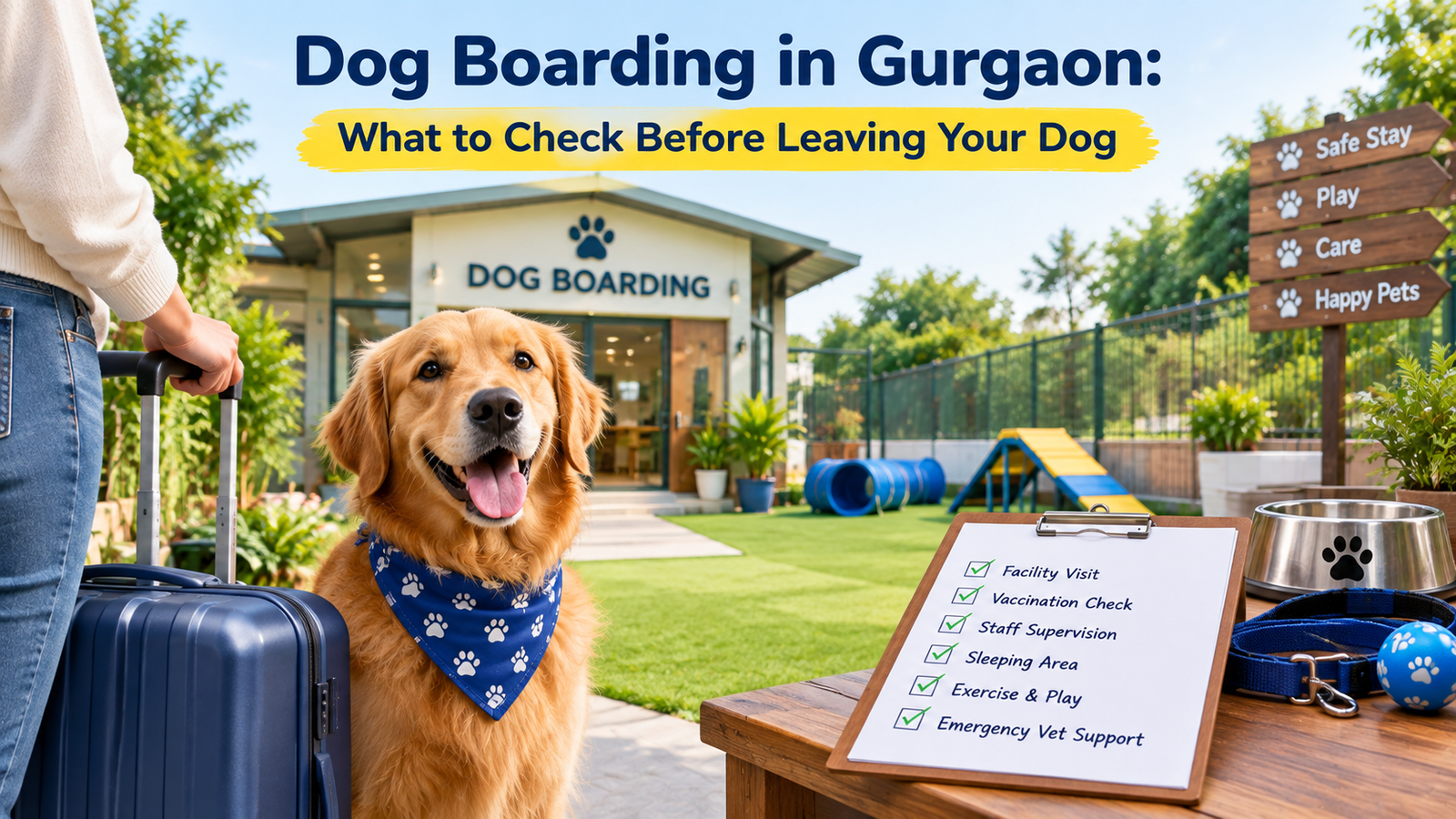
Simple Dog Boarding Checklist
Before leaving your dog, make sure you can answer these questions:
- Have I visited the facility?
- Is it clean and secure?
- Is there adequate staff supervision?
- Is overnight supervision available?
- Are vaccination requirements clear?
- Can my dog continue its normal diet?
- Can staff administer medication?
- Is there an emergency veterinary plan?
- Are dogs separated appropriately when necessary?
- How much exercise will my dog receive?
- Will I receive updates?
- Are additional charges clearly explained?
- Have I provided emergency contacts?
- Does the facility suit my dog’s temperament and health needs?
If several answers are unclear, ask more questions before making the booking.
Frequently Asked Questions About Dog Boarding in Gurgaon
How much does dog boarding cost in Gurgaon?
The cost varies depending on the facility, accommodation, duration, food, supervision, exercise, medication and additional services. Prices may also change during holidays and peak travel periods. Always request the complete cost before booking.
How early should I book dog boarding in Gurgaon?
For weekends, festivals and holiday periods, booking early is sensible because popular facilities can have limited capacity. If your dog has never boarded before, consider a short trial stay before arranging a longer booking.
Should I visit a dog boarding facility before booking?
Yes. A visit lets you check cleanliness, security, sleeping arrangements, staff supervision and the overall environment before leaving your dog.
What vaccinations are required for dog boarding?
Requirements vary between facilities. Ask the boarding provider for its current vaccination policy and discuss your dog’s vaccination status with your veterinarian before the stay.
Can my dog take its own food to boarding?
Many facilities allow owners to provide their dog’s usual food. Ask beforehand and provide clear feeding instructions, particularly if your dog has a sensitive stomach or special diet.
Can a boarding facility give my dog medication?
Some facilities provide medication administration, while others may have restrictions. Confirm this before booking and provide written instructions for every medication.
Is boarding suitable for an anxious dog?
It depends on the dog’s individual temperament and the facility. Ask whether the facility offers individual accommodation, quiet areas and individual walks instead of compulsory group activities.
What should I do if my dog becomes sick while boarding?
The facility should have an emergency procedure covering veterinary assessment, owner notification and transportation for treatment. Before leaving, make sure the staff have your veterinarian’s contact details and an emergency contact who can make decisions if you are unavailable.
Final Thoughts
Choosing Dog Boarding in Gurgaon should be based on your dog’s individual needs rather than price or appearance alone. Clean accommodation, appropriate supervision, secure facilities, suitable exercise, vaccination policies and access to veterinary care are all important considerations.
Visit the facility before booking whenever possible. Ask what will happen during your dog’s entire stay, including feeding, sleeping, exercise, medication and emergencies.
Most importantly, choose a boarding arrangement that matches your dog’s age, health, temperament and normal routine. The right environment can make your time apart easier for both you and your pet.
VetsInGurgaon provides general pet-care information for educational purposes. For vaccination, medication, illness or other medical concerns, consult a qualified veterinarian.