Bringing a kitten home is exciting. They’re playful, curious, affectionate, and quickly become part of the family.
But along with all the cuddles and cute moments comes an important responsibility that many first-time cat owners overlook — vaccinations.
A lot of people assume indoor kittens don’t need vaccines, or that vaccinations can wait until the kitten grows older. Unfortunately, that’s one of the biggest mistakes new pet parents make.
Vaccinations protect kittens from serious and sometimes life-threatening diseases. More importantly, they help your kitten build a strong immune system during the early months of life.
If you’ve recently adopted a kitten and are confused about vaccination schedules, costs, booster shots, or side effects, this guide will help you understand everything in a simple and practical way.
Why Kitten Vaccination Is So Important
Kittens are born with very limited immunity. During the first few weeks, they rely mostly on antibodies from their mother’s milk. But as those antibodies start fading, kittens become vulnerable to infections.
Vaccinations help train the immune system to fight dangerous viruses and diseases before they become severe.
Without proper vaccination, kittens are at higher risk of:
• Respiratory infections
• Fever and weakness
• Severe digestive problems
• Organ damage
• Life-threatening viral diseases
Some infections spread extremely fast, especially if your kitten comes in contact with other animals.
When Should You Start Vaccinating Your Kitten?
Most veterinarians recommend starting vaccinations when kittens are around 6 to 8 weeks old.
The exact schedule may vary slightly depending on:
• Your kitten’s age
• Health condition
• Breed
• Lifestyle
• Risk exposure
Even indoor cats should receive core vaccinations because viruses can still enter homes through shoes, clothing, or other pets.
Core Vaccines Every Kitten Needs
Core vaccines are considered essential for all kittens.
These usually include:
• Feline Panleukopenia (Cat Distemper)
A serious viral infection that affects the digestive system and immune system.
• Feline Herpesvirus
Commonly linked to upper respiratory infections in cats.
• Calicivirus
Can cause mouth ulcers, breathing issues, and infections.
• Rabies Vaccine
Protects against rabies, which can also affect humans.
These vaccines are extremely important during the first year of your kitten’s life.
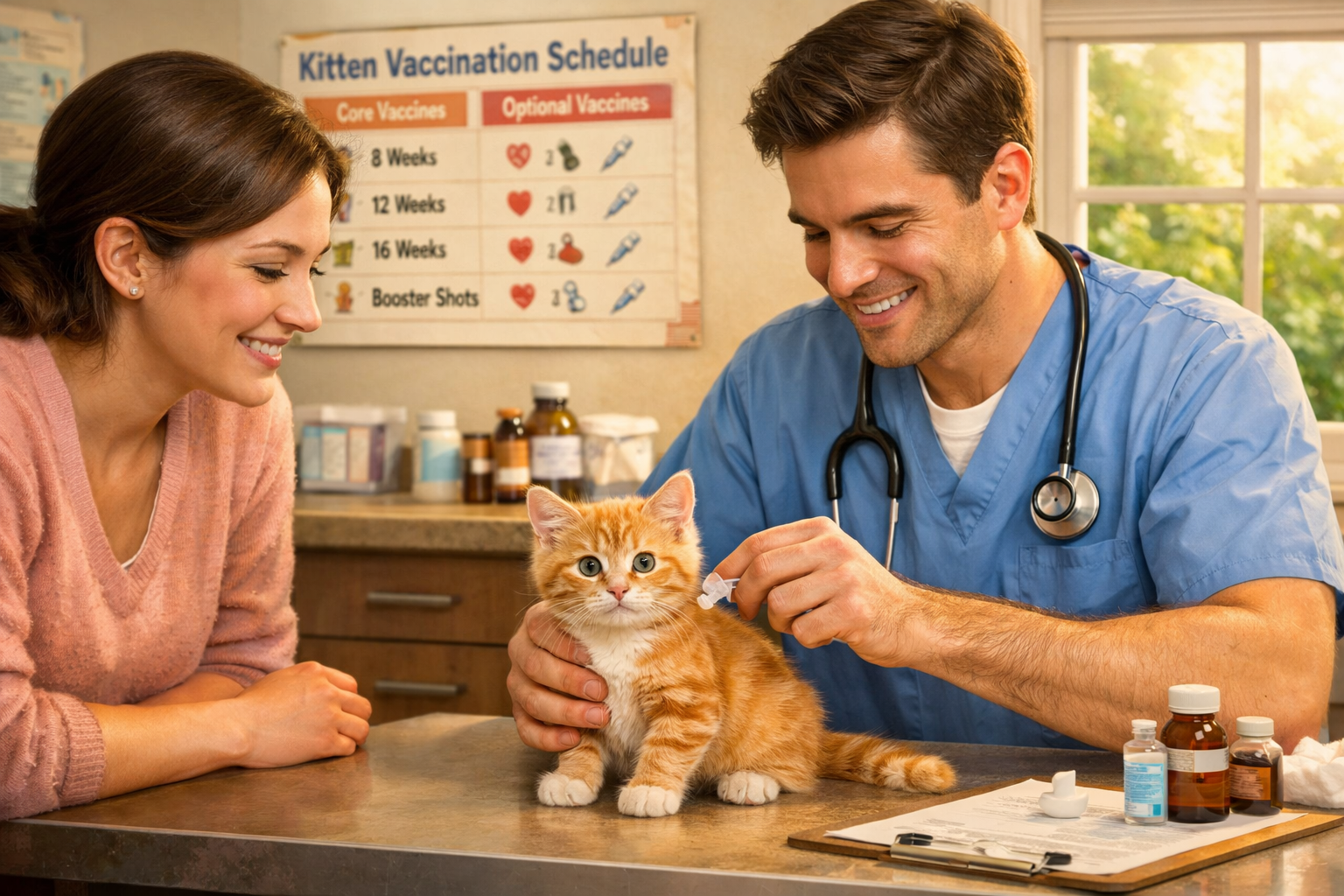
Recommended Kitten Vaccination Schedule
A general kitten vaccination schedule looks like this:
6–8 Weeks:
First FVRCP vaccine
10–12 Weeks:
Second FVRCP booster
14–16 Weeks:
Final FVRCP booster + Rabies vaccine
After 1 Year:
Annual booster shots
Your veterinarian may adjust this schedule slightly depending on your kitten’s health and medical history.
Are Indoor Cats Really Safe Without Vaccination?
This is one of the most common myths among cat owners.
Many people believe indoor kittens don’t need vaccines because they never go outside. But viruses can still enter your home through:
• Shoes
• Visitors
• Other pets
• Contaminated objects
Vaccination is still strongly recommended even for indoor cats.
Common Side Effects After Vaccination
Most kittens recover normally after vaccination.
Some mild side effects may include:
• Sleepiness
• Reduced appetite
• Mild fever
• Slight swelling near injection site
These symptoms usually disappear within 24–48 hours.
However, contact your veterinarian immediately if you notice:
• Difficulty breathing
• Severe vomiting
• Facial swelling
• Extreme weakness
Serious reactions are rare but should never be ignored.
How Much Does Kitten Vaccination Cost?
Vaccination costs can vary depending on the clinic, city, and type of vaccine used.
In Gurgaon and nearby areas, kitten vaccination costs generally depend on:
• Number of doses
• Vaccine brand
• Consultation charges
• Additional health checkups
Instead of focusing only on price, choose a trusted veterinary clinic with proper hygiene and experienced doctors.
How to Prepare Your Kitten for Vaccination Day
Vaccination visits become much easier when your kitten feels calm.
Here are a few simple tips:
• Carry your kitten in a secure carrier
• Avoid feeding a very heavy meal before the visit
• Keep the environment calm
• Bring their favorite blanket or toy
A stress-free experience helps your kitten feel safer during future vet visits.
What Happens If You Miss a Vaccine Dose?
Missing a booster shot can reduce vaccine effectiveness.
If you accidentally skip a dose, don’t panic. Contact your veterinarian as soon as possible.
In many cases, the schedule can simply continue without restarting everything from the beginning.
Why Regular Vet Checkups Matter Along With Vaccination
Vaccines are just one part of keeping your kitten healthy.
Routine veterinary visits also help monitor:
• Weight and growth
• Nutrition
• Parasites
• Dental health
• Skin and coat condition
Early detection of health problems can prevent serious complications later.
Common Mistakes New Cat Owners Make
Some common mistakes include:
• Delaying vaccines
• Skipping booster doses
• Assuming indoor cats are fully safe
• Ignoring deworming
• Visiting unqualified clinics
Good preventive care during the first year creates a healthier future for your cat.
Frequently Asked Questions
At what age should kittens get vaccinated?
Most kittens begin vaccinations between 6 to 8 weeks of age.
Do indoor kittens need vaccinations?
Yes, indoor kittens still require core vaccines because viruses can enter homes indirectly.
Are kitten vaccines safe?
Yes, vaccines are generally very safe. Mild side effects like sleepiness or low appetite are common for a short time.
How often do cats need booster vaccines?
Most cats require annual or periodic booster vaccinations depending on veterinary recommendations.
Can a kitten get vaccinated while sick?
Vaccination is usually postponed if a kitten is unwell. Your vet will first check overall health before vaccinating.
Final Thoughts
Vaccinating your kitten is one of the simplest yet most important steps you can take as a responsible cat parent.
It protects your kitten from serious diseases, strengthens immunity, and ensures a healthier life ahead.
The first few months are critical, so staying consistent with vaccination schedules, regular checkups, and preventive care makes a huge difference in your cat’s long-term health.
If you’re unsure about which vaccines your kitten needs or when to schedule them, always consult an experienced veterinarian instead of relying on random internet advice.
For professional kitten vaccination and pet healthcare support, visit Vets in Gurgaon: https://vetsingurgaon.com