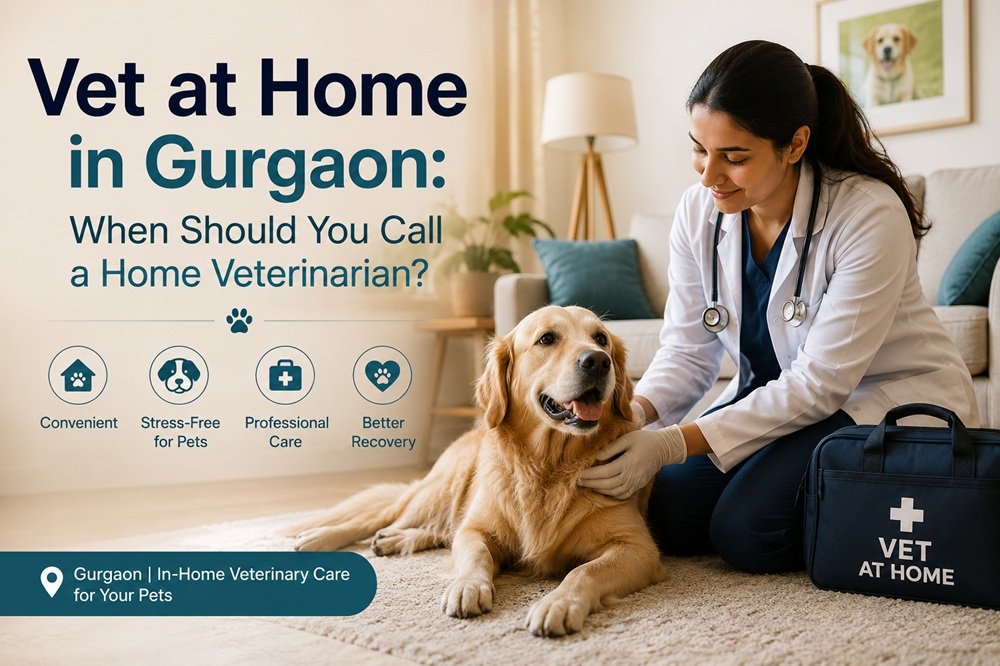
Vet at home in Gurgaon: the short answer
Call a home veterinarian in Gurgaon when your pet needs a professional examination but is stable enough to be assessed outside a hospital.
A home visit can be a sensible choice for a routine check-up, vaccination appointment, skin or ear concern, mild illness, mobility-limited senior pet, post-operative review, chronic-care follow-up, or a dog or cat that becomes highly distressed in the car or clinic.
Do not wait for a home appointment when your pet is struggling to breathe, collapsing, bleeding heavily, unable to urinate, having a prolonged or repeated seizure, showing signs of heatstroke, or recovering from major trauma.
Those situations need immediate veterinary attention at the nearest equipped emergency or referral hospital. A home vet may be able to guide transport, but the hospital setting is the priority.
If you are unsure, call a licensed veterinarian and describe what you can see, when it started, and whether it is getting worse. This guide is educational and does not diagnose an individual pet.
When a home veterinary visit makes sense

1. Your pet is unwell, but not in immediate danger
A home visit is often useful when your pet is uncomfortable or “not quite right” but still responsive, breathing normally, and able to stand or settle.
Examples include a new skin rash, itchy ears, a mild cough, reduced appetite without repeated vomiting, soft stools without blood, or a small wound that is not actively bleeding. A veterinarian can examine your pet, decide whether tests or medication are appropriate, and refer you to a clinic when the case needs equipment that cannot travel.
Do not use “at home” as a reason to delay care. If symptoms are escalating, call the veterinary service before booking so the clinician can help you choose between a house call and a hospital visit.
2. Travel is likely to cause unnecessary stress
Some dogs respond to a clinic trip with panting, drooling, avoidance, growling, snapping, or hiding. VCA Animal Hospitals notes that these reactions are commonly fear-related and may be triggered by transport, unfamiliar smells, other animals, or memories of treatment .
A familiar room can make an examination calmer for some pets and can help the veterinarian see how the animal moves, rests, eats, or uses its usual environment.
A home visit is not a substitute for gradual fear-free training, and it will not remove every stressor. But it may be a practical option for an anxious dog, a fearful cat, or a multi-pet household when the medical issue is stable.

3. Your pet is elderly, mobility-limited, or recovering
Senior pets and animals with arthritis, weakness, vision loss, or recent surgery may struggle with stairs, car rides, or a slippery clinic floor. A home veterinarian can assess the pet where its daily challenges actually happen: near the bed, food station, litter tray, or preferred resting area.
Ask in advance whether the service offers post-operative checks, wound review, medication support, or a referral pathway if the pet needs imaging, bloodwork, oxygen, or hospitalisation.

4. You need preventive or household-level care
Home visits can work well for wellness examinations, vaccination discussions, parasite-control planning, nutrition conversations, nail or ear checks, and health reviews for more than one pet.
They are also useful when you want to discuss environmental details such as a new puppy’s routine, a cat’s litter-box setup, medication storage, or safe movement around an apartment.
Before booking, confirm which services the veterinarian can safely provide at home and whether any vaccination or medication requires a specific cold-chain or observation protocol.

5. You need a follow-up, not a first response to a crisis
After a clinic visit or procedure, a home check can be convenient for monitoring appetite, hydration, mobility, incision appearance, or medication tolerance. Keep the discharge papers ready.
If the incision opens, bleeding increases, the pet becomes unresponsive, develops breathing difficulty, or pain appears severe, skip the routine home follow-up and contact the treating clinic or emergency hospital.
When a home visit is not enough
The following signs should be treated as emergency signals. Call the nearest veterinary emergency hospital while arranging transport; do not wait for a routine house call.
|
What you notice
|
Why it cannot wait
|
|---|---|
|
Difficulty breathing, gasping, noisy breathing, or blue/grey/purple gums
|
Breathing changes can reflect serious respiratory, heart, allergic, or airway problems.
|
|
Collapse, unresponsiveness, confusion, or inability to stand
|
These can occur with shock, poisoning, heatstroke, severe neurologic disease, or major blood loss.
|
|
Uncontrolled bleeding, pale gums, blood in vomit/urine/stool, or suspected internal bleeding
|
Visible bleeding can be deeper than it looks, and internal bleeding may progress quickly.
|
|
Repeated vomiting, severe or bloody diarrhea, or dry heaving with nothing coming up
|
Repeated gastrointestinal signs can cause dehydration and may signal obstruction, toxin exposure, or bloat.
|
|
Inability to urinate, especially with repeated straining or distress
|
Urinary obstruction can become life-threatening and needs urgent assessment.
|
|
A seizure lasting more than five minutes, repeated seizures, or seizure activity that does not stop
|
Immediate veterinary care is required; keep hands away from the mouth and time the event.
|
|
Sudden swollen or painful abdomen, repeated retching, or major trauma
|
Bloat, internal injury, or shock may need rapid diagnostics and surgery.
|
|
Heatstroke signs such as heavy panting, drooling, weakness, confusion, vomiting, diarrhea, or dry/sticky gums
|
Move the pet to shade or a cool room, begin gentle cooling with room-temperature water, and go to a veterinary hospital immediately.
|
This symptom list is consistent with emergency guidance from the American Animal Hospital Association and BluePearl Pet Hospital .
Gurgaon-specific questions to ask before booking
A good home-visit experience starts with a clear handoff. Gurgaon households vary from high-rise apartments to plotted homes, so share the exact location pin, tower or block, parking and lift instructions, and a phone number the veterinarian can reach on arrival.
Mention the pet’s species, age, approximate weight, current symptoms, temperament, known conditions, medications, and whether the pet can safely be handled.
Ask five practical questions: Is the veterinarian licensed and experienced with my pet’s species?
- What can be examined or treated at home?
- What equipment or sample collection is available?
- Which nearby clinic or emergency hospital receives referrals?
- What should I do if the pet deteriorates before the clinician arrives?

Gurgaon’s heat and traffic can make travel more difficult, but they should never be used to justify delaying emergency care. If the pet is unstable, ask for the fastest route to an equipped hospital and call ahead so the team knows you are coming.
How to prepare for a home veterinarian visit
Keep your pet in a quiet, well-lit room with enough space for the veterinarian to examine them. Avoid giving human painkillers or leftover antibiotics unless a veterinarian specifically instructs you to do so.
Have vaccination records, previous prescriptions, discharge notes, and recent photos or videos of unusual episodes available. For vomiting, diarrhea, limping, coughing, or seizures, a short time-stamped video can help describe what happened—without delaying the call.
If a toxin or household product may be involved, keep the packaging and note the likely amount and time of exposure. AVMA guidance advises calling a veterinarian or emergency clinic immediately for suspected poisoning, breathing difficulty, loss of consciousness, or seizures . Do not induce vomiting or attempt a home remedy unless a veterinary professional tells you to.
An injured or frightened pet may bite even if it is normally gentle. Keep your face away from the mouth, avoid hugging the animal, and ask another adult to help move or restrain them safely. For serious injury or collapse, minimise movement and follow the receiving hospital’s transport instructions.

A simple decision guide
Choose Emergency hospital now
The pet has a red-flag symptom: breathing difficulty, collapse, uncontrolled bleeding, inability to urinate, major trauma, suspected poisoning, heatstroke, or a prolonged/repeated seizure. Call ahead, keep the pet calm, and go.
Choose Home veterinarian soon
The pet is responsive and stable but needs an examination within the day or next available slot: persistent but non-severe discomfort, mild illness, a new skin or ear problem, mobility concerns, a post-operative review, or a pet whose fear of travel makes a clinic visit unusually difficult.
Choose Routine home care
The pet is behaving normally and you need preventive support, a wellness check, vaccination planning, medication review, home-environment advice, or care for a senior or multi-pet household. Keep a clinic relationship for diagnostics and emergencies even if home visits are your preferred format.
The bottom line for Gurgaon pet parents
A home veterinarian is best understood as a convenient clinical front door—not a replacement for every hospital service.
Use the home setting when it improves access, reduces avoidable travel stress, or helps a stable pet receive timely attention. Use the emergency hospital when the pet’s breathing, consciousness, circulation, urination, neurologic status, or pain suggests that minutes matter.
When in doubt, call early and describe what you can see. The most useful details are often simple: what changed, when it changed, how often it has happened, and whether your pet is getting better or worse.
Sources and further reading
[2] American Veterinary Medical Association (AVMA ), “First aid tips for pet owners”:
Editorial note: Veterinary guidance and service availability can change. Confirm current hours, credentials, fees, equipment, and referral arrangements directly with the home-visit provider or emergency hospital.