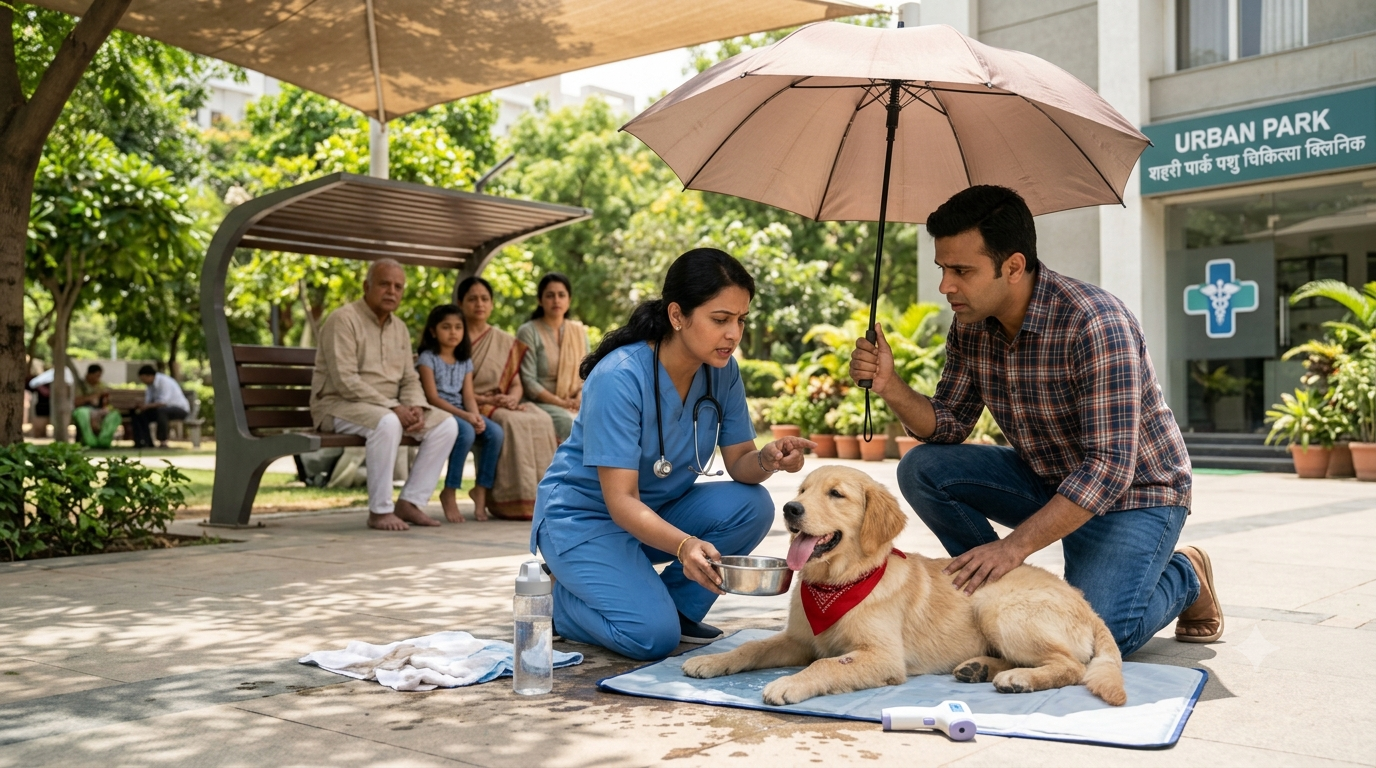
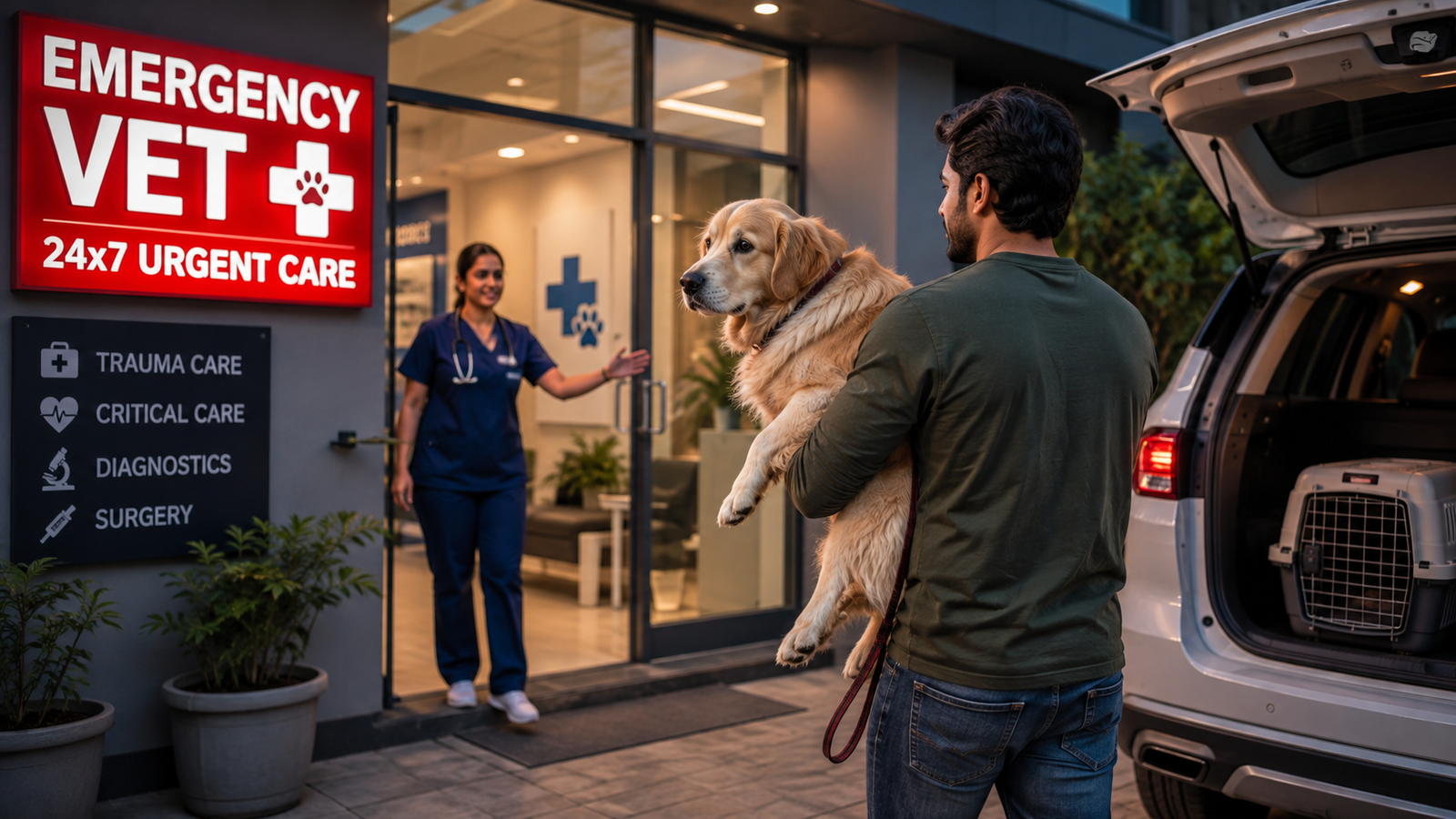
A pet emergency can happen late at night, during a walk, after an accident, or when your pet’s breathing suddenly changes. In these situations, the priority is not diagnosing the problem at home. It is recognising the warning signs, contacting a veterinary professional, and reaching appropriate care without unnecessary delay.
For families searching for an emergency vet in Gurgaon, also known as Gurugram, preparation can make a significant difference. Traffic, sector distances, and unfamiliar routes can affect travel time, particularly during an emergency.
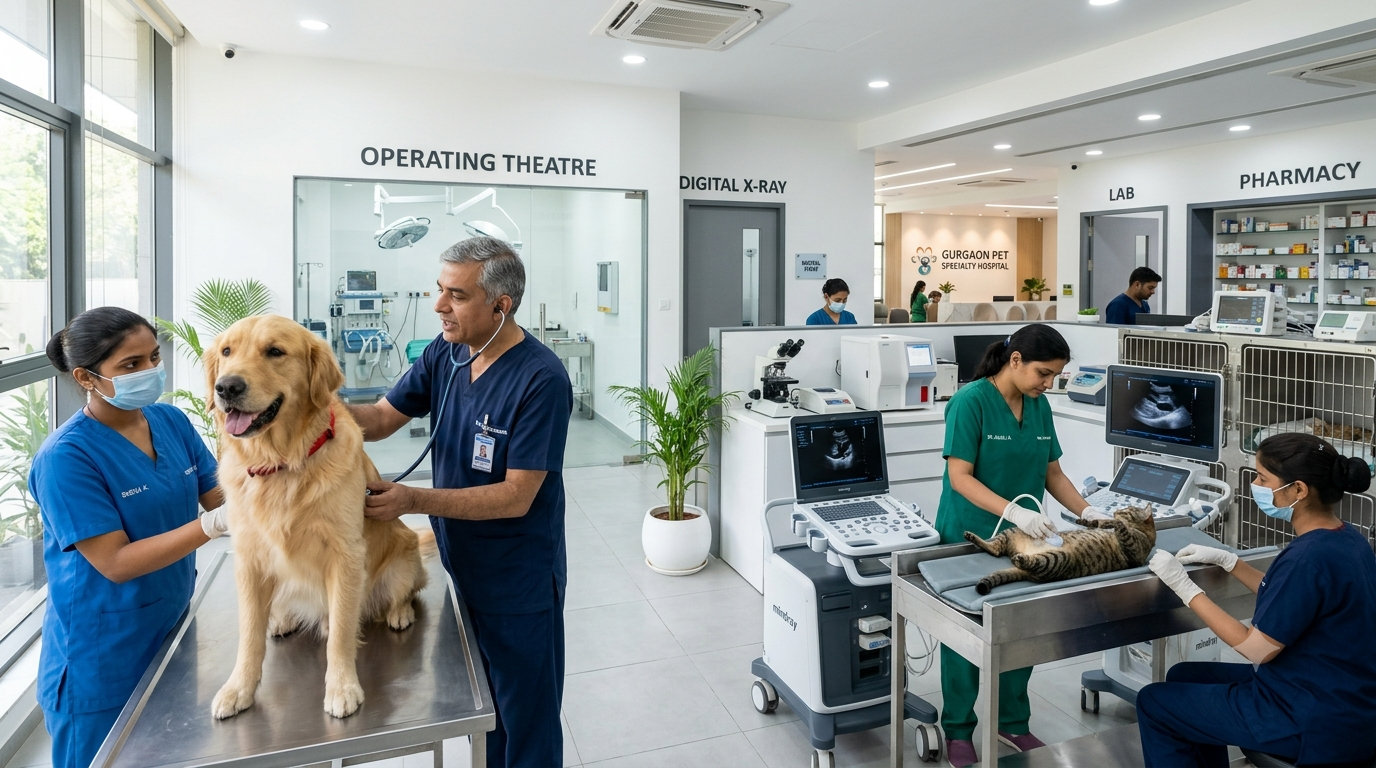
Save the contact details of one nearby emergency veterinary clinic and one backup hospital. Before an emergency happens, check whether they provide overnight care, oxygen support, diagnostic imaging, blood testing, hospitalisation, surgery, and emergency transport assistance.

This guide explains when your pet may need emergency veterinary care in Gurgaon, what to do while travelling to a veterinary hospital, and which common home responses can make an emergency worse.
Important: This article provides general educational information. It is not a diagnosis and does not replace examination or treatment by a qualified veterinarian.
When Should You Call an Emergency Vet in Gurgaon?
Not every unusual symptom requires an emergency hospital, but certain signs should never be ignored. If your pet has difficulty breathing, collapses, experiences severe trauma, may have been poisoned, cannot urinate, has uncontrolled bleeding, or develops other potentially life-threatening symptoms, contact a veterinary professional immediately.
1. Difficulty Breathing or Unusual Gum Colour
Breathing difficulty is always a serious warning sign.
Gasping, noisy breathing, open-mouth breathing in a cat, persistent wheezing, extreme breathing effort, or unusually rapid or laboured breathing can indicate a potentially serious problem.
Blue, grey, purple, or unusually pale gums can also indicate an emergency.
Do not wait to see whether your pet improves after resting. Call an emergency veterinary facility and begin travelling according to the veterinarian’s instructions.
Keep your pet calm and minimise unnecessary handling. Do not force food, water, or oral medication.

If your pet is conscious, allow it to remain in a position that makes breathing easier, provided this does not interfere with safe transportation.
2. Collapse, Unresponsiveness, or Sudden Inability to Stand
A pet that suddenly collapses, becomes unresponsive, appears severely disoriented, or cannot stand normally needs immediate veterinary assessment.
Possible causes can include shock, poisoning, heat-related illness, heart problems, neurological problems, internal bleeding, severe pain, or other serious conditions.
Even if your pet appears to recover after a short period, temporary improvement does not necessarily mean the underlying problem has resolved.

Contact an emergency veterinarian promptly rather than waiting for the symptoms to return.
3. Seizures
During a seizure, focus on keeping your pet away from immediate hazards.
Move furniture and other objects away from the animal if you can do so safely. Do not attempt to restrain the body, place objects in the mouth, or put your fingers near the teeth.
If possible, note how long the seizure lasts. You can also record a short video for the veterinarian, but only if doing so does not delay professional care.
A seizure that lasts several minutes, repeated seizures, or failure to regain normal awareness should be treated as an especially urgent situation.
Contact a veterinarian immediately for professional guidance.

4. Suspected Poisoning or Toxin Exposure
If you believe your pet has eaten or been exposed to a potentially harmful substance, contact a veterinarian immediately.
Potential hazards can include human medications, rodenticides, cleaning products, pesticides, toxic plants, chocolate, xylitol-containing foods, and other household substances.
Keep the original packaging, product label, remaining material, or a photograph of the substance available for the veterinary team.
Do not induce vomiting or give milk, oil, salt, activated charcoal, or human medication unless a veterinarian specifically tells you to do so.
The appropriate response can depend on the substance, amount involved, time since exposure, and your pet’s current condition.

5. Severe Bleeding, Trauma, Burns, or Suspected Fractures
Road accidents, falls, animal fights, deep wounds, burns, and suspected fractures require prompt veterinary attention, even when a pet is still walking or appears alert.
Some injuries, including internal bleeding and shock, may not be immediately visible.
For external bleeding, use clean cloth or gauze to apply gentle, continuous pressure when it is safe to do so.
Do not remove an embedded object, attempt to straighten a limb, or apply household chemicals to a wound.
If your pet has suffered significant trauma, move it carefully using a firm, flat support when possible. Handle the animal slowly because pain and fear can cause even a normally gentle pet to bite.
The American Veterinary Medical Association recommends using first aid as temporary support while obtaining professional veterinary care.

6. Repeated Vomiting, Bloody Diarrhoea, Bloating, or Inability to Urinate
Repeated vomiting or severe diarrhoea can cause dehydration, weakness, and other complications. Puppies, kittens, senior pets, and animals with underlying health problems may be particularly vulnerable.
Blood in vomit or stool, severe abdominal pain, weakness, collapse, or a swollen abdomen increases the urgency.
Sudden abdominal bloating accompanied by retching, restlessness, pale gums, weakness, or collapse can represent a potentially life-threatening emergency.
Inability to urinate is also an urgent problem, particularly in male cats. Do not wait until the next morning or attempt home treatment.
Call a veterinary facility and explain your pet’s species, age, symptoms, how long the problem has been present, and any recent food, medication, or possible toxin exposure.
What Should You Do Before Travelling to an Emergency Vet?
Once you recognise a possible emergency, your next priority should be safe transportation and communication with the veterinary team.

Call the Veterinary Clinic Before Leaving
Calling ahead allows the veterinary team to understand what is happening and prepare for your arrival when possible.
Tell the clinic:
Your pet’s species, age, approximate weight, symptoms, when the symptoms started, breathing status, consciousness level, possible toxin exposure, recent injury, and any first aid already provided.
Ask whether the facility can manage the emergency and whether it has services such as:
- Emergency admission
- Overnight monitoring
- Oxygen support
- Blood testing
- Diagnostic imaging
- Hospitalisation
- Emergency surgery
- Referral to a specialist hospital
- Pet transport assistance
During a genuine emergency, avoid delaying treatment while comparing routine consultation prices.
If another family member is available, ask them to manage navigation, records, and phone calls while you concentrate on keeping your pet safe.
Transport Your Pet Safely Through Gurgaon Traffic
Safe transportation is particularly important after trauma, collapse, seizures, or breathing problems.
Use a secure carrier for cats and small dogs. For a large or injured dog, a blanket, board, or other firm support may help with transportation when two people are available.
Keep the vehicle quiet and comfortably ventilated. Do not allow an injured or disoriented pet to move freely inside the vehicle.
Gurgaon traffic can make journey times unpredictable, so choose the safest practical route and inform the clinic if you are significantly delayed.
Take medical records, current medications, previous test reports, and toxin packaging if they are immediately available.

Do not delay leaving simply to collect paperwork.
What Should You Not Do During a Pet Emergency?
Knowing what not to do can be just as important as knowing what to do.
1. Avoid Human Medicines and Unverified Home Remedies
Many human medicines can be dangerous to dogs and cats.
Painkillers, cold medicines, anti-diarrhoeal medicines, sleeping tablets, and other human medications should not be given unless specifically prescribed or recommended by a veterinarian for your pet.
Do not assume that a medicine that is safe for a person—or even another animal—is safe for your pet.
Avoid forcing food or water if your pet is vomiting, unconscious, choking, or experiencing breathing difficulty.
2. Do Not Attempt to Diagnose the Emergency at Home
Searching symptoms online can help you understand general warning signs, but it cannot replace a veterinary examination.
An emergency hospital may need to assess oxygen levels, circulation, neurological function, blood values, internal injuries, or other conditions using professional equipment.
If you are unsure whether a symptom is serious, contact a veterinary professional and describe exactly what you are seeing.
When breathing, consciousness, circulation, poisoning, or significant trauma is involved, uncertainty should be a reason to seek professional advice—not a reason to wait.
How to Prepare an Emergency Vet Plan in Gurgaon
The best time to prepare for a pet emergency is before one happens.

Save a Primary Emergency Clinic and a Backup Hospital
Choose veterinary facilities based on practical emergency capabilities rather than online ratings alone.
Confirm the clinic’s exact location, working hours, after-hours access, emergency admission procedure, doctor availability, accepted payment methods, and whether it can stabilise and refer complex cases.
Ideally, save both a primary emergency vet in Gurgaon and a backup veterinary hospital in your phone.
This is particularly useful if the first facility is unavailable, too far away, or unable to provide the treatment your pet requires.
Keep Your Pet’s Emergency Information Ready
Create a simple emergency note on your phone containing your pet’s essential medical information.
Include the pet’s name, species, age, approximate weight, known medical conditions, allergies, current medicines, vaccination information, microchip details if applicable, and regular veterinarian’s contact information.
Review the information periodically and update it whenever your pet’s medication or medical history changes.
Keep a Basic Pet First-Aid Kit
A basic pet first-aid kit can help with temporary support while you arrange veterinary care.
Useful supplies can include gauze, clean towels, bandage material, disposable gloves, a thermometer, a torch, a secure carrier, a leash, and your pet’s medical records.
A first-aid kit is designed to support your pet during an emergency—not replace professional veterinary treatment.
Frequently Asked Questions About Emergency Vet Care in Gurgaon
Q1: Is a Home Veterinarian Suitable for a Pet Emergency?
ANS: A home veterinarian may help with some stable urgent conditions, but breathing difficulty, collapse, poisoning, severe trauma, uncontrolled bleeding, seizures, bloat, or inability to urinate generally require immediate veterinary-facility care.
Q2: Can I Wait Until Morning If My Pet Seems Slightly Better?
ANS: No, temporary improvement does not always mean the emergency has passed, so contact a veterinarian promptly after serious symptoms such as collapse, poisoning, trauma, breathing difficulty, repeated vomiting, or seizures.
Q3: What Information Should I Give an Emergency Vet in Gurgaon?
ANS: Provide your pet’s species, age, weight, symptoms, onset time, breathing and consciousness status, medical history, medications, possible toxin exposure, injuries, and any first aid provided.
Q4: How Can I Find a Reliable Emergency Vet Near My Gurgaon Location?
ANS: Choose a veterinary clinic or hospital with confirmed emergency hours, overnight access, diagnostics, hospitalisation, and referral facilities, and keep a backup emergency veterinary facility saved.
Emergency Vet Gurgaon: Quick Action Guide
| Emergency Sign | What to Do | What to Avoid |
|---|---|---|
| Difficulty breathing | Call a veterinarian and seek urgent care | Do not force food, water, or medicine |
| Blue, grey, purple, or very pale gums | Seek immediate veterinary assessment | Do not wait for the colour to normalise |
| Collapse or unresponsiveness | Contact an emergency veterinary facility immediately | Do not assume recovery means the danger has passed |
| Seizure | Remove hazards and time the episode | Do not restrain the pet or put anything in its mouth |
| Suspected poisoning | Contact a veterinarian and keep the product packaging | Do not induce vomiting without veterinary advice |
| Severe bleeding | Apply gentle continuous pressure with clean gauze or cloth | Do not remove embedded objects |
| Major trauma | Minimise movement and transport carefully | Do not straighten suspected fractures |
| Severe vomiting or bloody diarrhoea | Contact a veterinarian promptly | Do not rely on unverified home remedies |
| Sudden bloating and retching | Treat as an emergency and seek immediate care | Do not wait overnight |
| Unable to urinate | Seek urgent veterinary care | Do not attempt home treatment |
Final Takeaway: Act Quickly When Your Pet Needs Emergency Care
When your pet shows signs of a potentially serious emergency, act on the warning sign rather than waiting for certainty.
Call an emergency vet in Gurgaon, follow the veterinary team’s transportation instructions, keep your pet calm and secure, avoid unapproved medicines and home remedies, and reach professional care as quickly and safely as practical.
Preparing emergency contacts, medical records, a secure carrier, transportation arrangements, and a basic first-aid kit in advance can reduce stress when every minute matters.
Online information cannot diagnose an animal.
For difficulty breathing, collapse, suspected poisoning, severe trauma, uncontrolled bleeding, seizures, sudden bloating, inability to urinate, or unresponsiveness, contact a qualified veterinary professional or emergency veterinary hospital immediately.