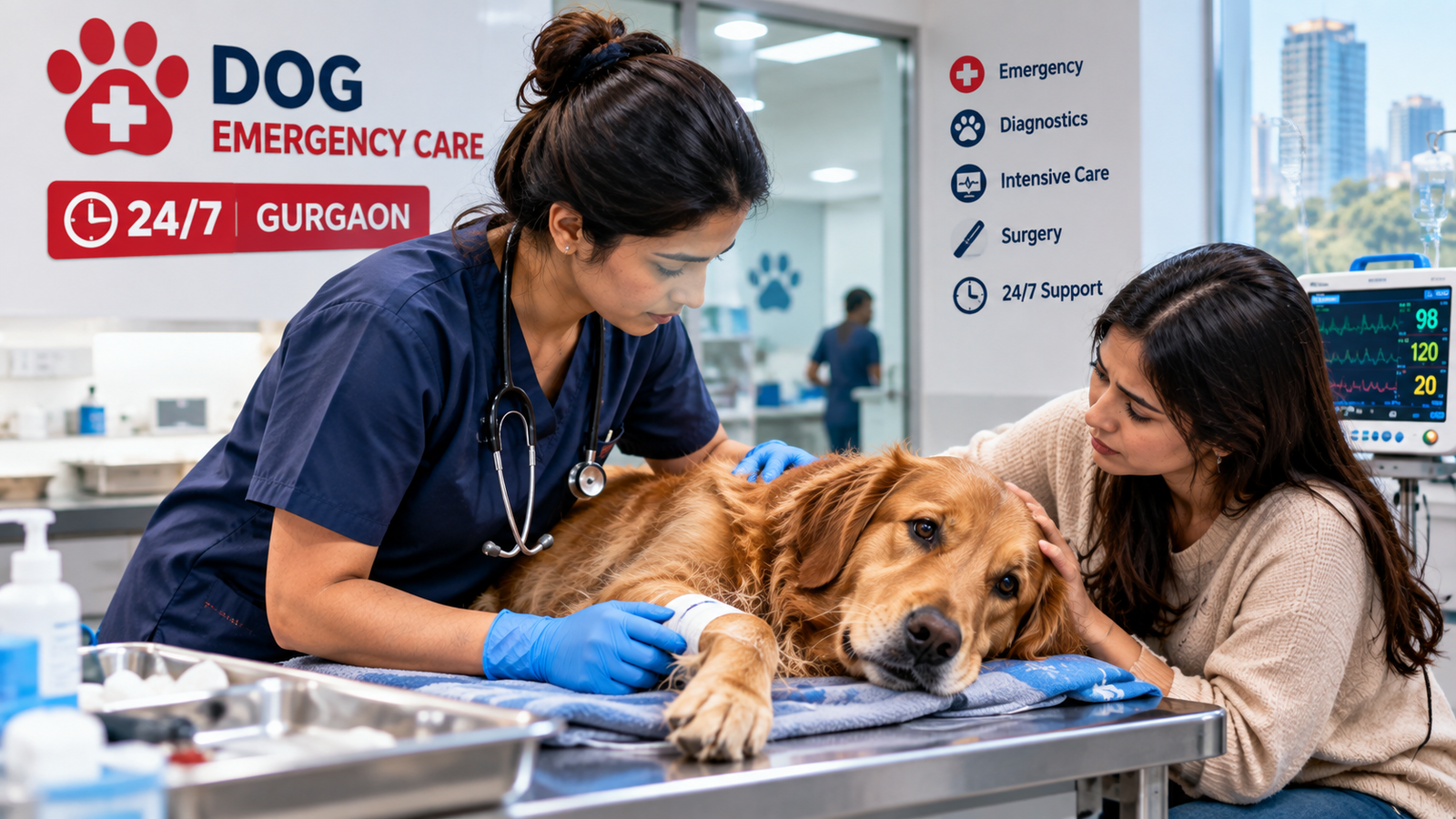
Most dog emergencies happen without warning. A dog may suddenly struggle to breathe, collapse after an accident, swallow a toxic substance or develop severe heatstroke. In situations like these, waiting to see whether the symptoms improve can put your pet at greater risk.
For pet parents looking for dog emergency care in Gurgaon, knowing the warning signs is essential. If you want a broader overview of what to do when a pet needs urgent treatment, read our guide to emergency vet care in Gurgaon. Gurgaon’s hot weather, busy roads and large residential areas can make quick preparation especially important.

Signs such as difficulty breathing, collapse, uncontrolled bleeding, suspected poisoning, prolonged seizures and severe abdominal problems require prompt veterinary attention. Veterinary first aid can provide temporary support, but it does not replace professional diagnosis and treatment. VCA advises contacting a veterinary hospital as soon as possible during an emergency.
10 Situations That Need Immediate Dog Emergency Care in Gurgaon

1. Difficulty Breathing or Choking
Breathing problems should always be treated seriously. Warning signs may include rapid or laboured breathing, unusual breathing sounds, pale or bluish gums, severe distress or stretching the neck to breathe.
Choking can occur when a dog swallows a toy, bone, food item or another foreign object.
If your dog is struggling to breathe:
- Keep your dog calm.
- Move away from immediate hazards.
- Check the mouth only if it is safe.
- Do not push a visible object farther into the throat.
- Contact an emergency vet in Gurgaon immediately.
Severe breathing difficulty can deteriorate rapidly and requires veterinary assessment.
For more information about first aid, see the VCA guide to first aid for dogs.
2. Collapse, Fainting or Sudden Unresponsiveness
A dog that suddenly collapses or becomes unresponsive needs immediate veterinary attention, even if consciousness returns quickly.
Collapse can have several possible causes, including severe blood loss, heart problems, poisoning, heatstroke or neurological problems.
Watch for additional signs such as:
- Pale or white gums
- Rapid breathing
- Weakness
- Vomiting
- Cold limbs
- Unusual or absent responsiveness
Keep your dog as quiet as possible and minimise movement while arranging transport to a veterinary hospital. Collapse is recognised as an emergency condition by veterinary emergency-care guidance.
3. Severe Bleeding or Serious Injury
Road accidents, falls, dog fights and sharp objects can cause serious injuries.
Immediate veterinary care may be required if your dog has:
- Heavy or uncontrolled bleeding
- A deep or penetrating wound
- A suspected broken bone
- A chest or abdominal injury
- A serious bite wound
- A head injury
- Breathing difficulty after an accident
For external bleeding, place clean gauze or cloth over the wound and apply firm, continuous pressure while arranging veterinary care.
Do not repeatedly remove the material to check whether the bleeding has stopped. If blood soaks through, additional material can be placed over the existing layer.
Serious trauma should be assessed by a veterinarian even when your dog initially appears normal because some injuries may not be obvious immediately.
4. Suspected Poisoning or Toxic Ingestion
Dogs can accidentally consume medicines, cleaning products, pesticides, chemicals, toxic foods or other dangerous substances.
Possible signs include:
- Vomiting or diarrhoea
- Excessive drooling
- Tremors
- Weakness
- Seizures
- Difficulty walking
- Collapse
- Abnormal behaviour
If you suspect poisoning, contact a veterinarian immediately. Take the packaging, label or a photograph of the suspected substance with you if possible.
Do not induce vomiting or give your dog milk, oil, medication or another home remedy unless a veterinarian specifically instructs you to do so.
Some poisoning treatments are time-sensitive, making rapid veterinary assessment important.
For additional information, see VCA’s guidance on acute toxin ingestion in pets.
5. Heatstroke During Gurgaon’s Hot Weather
Gurgaon’s summer temperatures can create serious risks for dogs, particularly during outdoor exercise or when a dog is left in a poorly ventilated environment.
Warning signs of heatstroke can include:
- Excessive panting
- Weakness
- Lethargy
- Distress
- Abnormal gum colour
- Disorientation
- Seizures
- Collapse
Heatstroke is a medical emergency. If you suspect overheating, move your dog away from the heat and begin controlled cooling while contacting a veterinarian.
Use cool water and airflow rather than extreme cooling methods. Veterinary guidance recommends prompt temperature reduction and professional assessment.
Read more about heatstroke in dogs from VCA Animal Hospitals.
6. Prolonged or Repeated Seizures
Seizures can be frightening for pet parents, but attempting to restrain a dog or placing your fingers in its mouth can cause injury.
During a seizure:
- Move nearby furniture and objects away.
- Keep people and other pets at a safe distance.
- Do not attempt to hold your dog down.
- Keep your hands away from the dog’s mouth.
- Time the seizure if possible.
- Record a video if you can do so safely.
A seizure lasting more than five minutes or multiple seizures occurring close together requires immediate veterinary treatment.
Even after a first seizure stops, arrange veterinary assessment to determine the possible underlying cause.
7. Sudden Abdominal Swelling or Repeated Retching
A suddenly swollen abdomen combined with repeated attempts to vomit without producing anything can indicate a potentially life-threatening emergency such as gastric dilatation-volvulus, commonly called bloat.
Other warning signs can include:
- Restlessness
- Severe abdominal discomfort
- Excessive drooling
- Weakness
- Rapid breathing
- Collapse
- Repeated unproductive retching
Do not wait for these symptoms to disappear. Contact an emergency dog hospital in Gurgaon and arrange immediate veterinary assessment.
Repeated retching, particularly when associated with abdominal swelling, is listed among serious emergency signs by veterinary emergency-care services.
8. Eye Injuries or Sudden Vision Problems
Eye injuries can become serious quickly and may threaten vision.
Seek urgent veterinary care if your dog develops:
- A visibly injured or protruding eye
- Severe eye pain
- Sudden vision loss
- A penetrating eye injury
- Significant swelling
- Persistent squinting following trauma
Do not allow your dog to repeatedly rub or scratch the affected eye.
Veterinary emergency guidance identifies eye injuries and sudden vision problems as conditions requiring prompt assessment.
9. Severe Allergic Reaction or Signs of Shock
A severe allergic reaction can develop quickly following an insect sting, medication, food exposure or another trigger.
Emergency warning signs can include:
- Facial or muzzle swelling
- Difficulty breathing
- Vomiting
- Weakness
- Collapse
- Pale gums
- Severe restlessness
Shock can also occur following major trauma, blood loss, heatstroke or severe allergic reactions.
Rapid breathing, a weak pulse, pale or white gums, severe weakness and cool extremities can be signs of shock and require immediate veterinary treatment.
10. Inability to Urinate or Severe Pain
Sudden severe pain or an inability to urinate can indicate a serious medical problem.
Watch for:
- Repeated attempts to urinate without producing urine
- Crying or obvious distress
- Severe abdominal discomfort
- Sudden weakness
- Refusing to move
- Restlessness
- Unusual behaviour when touched
If your dog suddenly appears severely uncomfortable or cannot perform a normal bodily function, contact a veterinarian rather than waiting until the next morning.
For a practical step-by-step overview of what pet parents should do before reaching a clinic, see our emergency pet care guide.
What Should You Do During a Dog Emergency in Gurgaon?
Knowing what to do before reaching the hospital can make the situation more manageable.

1. Stay Calm and Check for Immediate Dangers
First, make sure the area is safe for both you and your dog.
Move your dog away from traffic, electrical hazards, aggressive animals, extreme heat or other immediate dangers if it is safe to do so.
Remember that an injured or frightened dog may bite even if it is normally gentle. Keep your face away from the dog’s mouth and avoid unnecessary handling.
VCA recommends keeping an injured dog quiet and minimising movement, particularly when trauma, broken bones or neurological symptoms are possible.
2. Call the Veterinary Hospital Before Travelling
Tell the veterinary team:
- Your dog’s age
- Approximate weight
- Main symptoms
- When the problem started
- Whether your dog is conscious
- Whether breathing is normal
- Any known injury
- Possible toxin exposure
- Current medications or medical conditions
Calling ahead can allow the veterinary team to prepare for your arrival.
3. Transport Your Dog Safely
For small dogs, a secure carrier can help limit movement.
For larger or injured dogs, use a blanket or suitable firm support if necessary. Ask another person to help move your dog if possible.
If your dog is seriously injured or cannot be transported safely in a normal vehicle, you can also read our guide to emergency pet ambulance services in Gurgaon.
Where Can You Seek Emergency Veterinary Care in Gurgaon?
When looking for 24-hour vet care in Gurgaon, always confirm availability by phone before travelling because emergency coverage and services can change.
One local option is CGS Hospital Gurugram, which currently states that its Gurugram hospital operates from 8 am to 8 pm, with emergency coverage from 8 pm to 8 am. Its published information also lists emergency contact numbers and its DLF Phase 3 location.
CGS also states that its emergency service provides veterinary staff and overnight patient monitoring.

Important: Always call before travelling to confirm that the branch is currently accepting emergencies and can handle your dog’s specific condition. Complex cases may require specialist surgery, intensive care or referral.
How to Prepare for a Dog Emergency Before It Happens
Emergency preparation can save valuable time.
Keep these details easily accessible:
- Regular veterinarian’s phone number
- Emergency veterinary hospital number
- Backup veterinary facility
- Dog’s medical records
- Current medication details
- Vaccination information
- Microchip information, if applicable
- Carrier or transport arrangement
- Basic pet first-aid supplies
A basic emergency kit can include clean gauze, towels, gloves, non-stick bandages, saline and a spare leash.
It is also useful to save the location and phone number of your preferred dog emergency hospital in Gurgaon before a crisis occurs.
Frequently Asked Questions About Dog Emergency Care in Gurgaon
When should I take my dog to an emergency vet?
Seek immediate veterinary care for difficulty breathing, collapse, uncontrolled bleeding, suspected poisoning, serious trauma, prolonged or repeated seizures, heatstroke, sudden abdominal swelling with repeated retching or rapidly worsening symptoms.
Can I wait until morning if my dog seems better?
Not necessarily. Some serious problems can temporarily appear to improve while the underlying condition remains. After significant trauma, poisoning, collapse or another serious event, veterinary assessment is advisable.
Should I give my dog food or medicine during an emergency?
Do not give medication or attempt potentially harmful home treatment unless a veterinarian specifically recommends it. This is especially important when poisoning, vomiting, unconsciousness or possible surgery is involved.
What should I take to the emergency veterinary hospital?
Take your dog’s medical records and current medications if available. If poisoning is suspected, take the product packaging, label or a photograph of the suspected substance.
How can I find a 24-hour vet in Gurgaon?
Search for a veterinary hospital that specifically provides emergency or overnight care and call before travelling to confirm current availability. Local services can have different hours and emergency arrangements.
Final Takeaway
Recognising an emergency is one of the most important parts of dog emergency care in Gurgaon. Breathing difficulties, collapse, serious injuries, poisoning, heatstroke, prolonged seizures, abdominal emergencies, eye injuries, shock and severe pain should not be ignored.
Keep your veterinarian’s number saved, identify an emergency veterinary hospital before you need one and call ahead whenever possible.
First aid may help protect your dog while travelling, but professional veterinary assessment remains essential during a genuine emergency.
Disclaimer: This article is for general pet-care information only and is not a substitute for veterinary diagnosis or treatment. If your dog is showing severe or rapidly worsening symptoms, contact a qualified veterinarian or emergency veterinary hospital immediately.