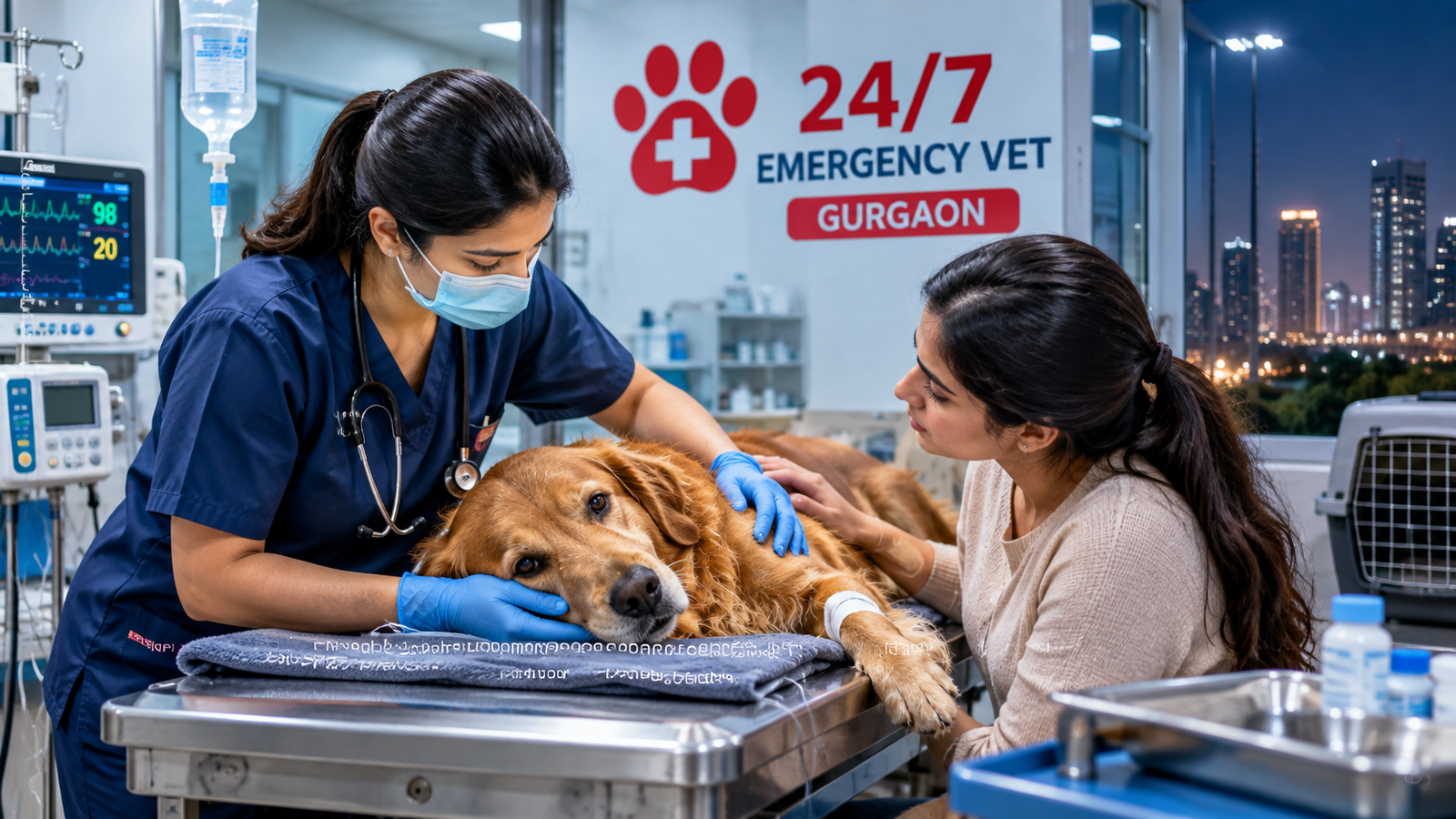
A pet emergency can happen at midnight, during a weekend, or while your regular clinic is closed. Breathing difficulty, collapse, poisoning, severe injury, uncontrolled bleeding, heatstroke, seizures and a swollen abdomen should not wait for a routine appointment.
In these situations, the safest approach is to contact a 24-hour emergency vet in Gurgaon, explain what is happening and travel to an equipped veterinary hospital as quickly as practical. Pet parents can also read our guide on emergency vet care in Gurgaon for additional guidance on recognising urgent symptoms and preparing for emergency treatment.
Gurgaon, also called Gurugram, is spread across busy sectors and highways. Traffic can make a nearby clinic more useful than a highly rated facility farther away.

This guide explains how to recognise a pet emergency, what to do before leaving home, how to transport your pet safely and how to prepare an after-hours veterinary plan.
Important: Online information cannot diagnose an animal. If your pet is struggling to breathe, unconscious, collapsing, bleeding heavily or suspected of ingesting a toxin, contact a veterinary professional immediately.
When Does Your Pet Need a 24-Hour Emergency Vet?
Some symptoms require immediate veterinary assessment rather than waiting for your regular clinic to reopen.
For a practical first-response checklist, see our emergency pet care guide, which covers what pet parents can do before reaching a veterinary clinic.

Breathing Trouble, Collapse or Abnormal Gums
Gasping, open-mouth breathing in a cat, noisy breathing, extreme breathing effort, blue or grey gums, sudden collapse or unresponsiveness are emergency signs.
Keep your pet calm and minimise handling. Do not force food, water or oral medicine. Call the hospital while arranging transport.
Pale or white gums, a weak pulse, severe weakness and confusion can indicate shock or poor circulation.
A pet may appear briefly better after collapsing, but this does not rule out internal bleeding, heart disease, poisoning or another serious problem.
Poisoning or a Swallowed Object
Contact a veterinarian immediately if your dog or cat may have eaten:
- Human medicine
- Rodent poison
- Cleaning liquid
- Pesticide
- Chocolate
- Xylitol
- A toxic plant
- An unknown substance
Keep the product packet, label or a photograph ready.
If your pet vomited or chewed the product, place a sample in a sealed bag for the veterinarian if it can be collected safely.
Do not induce vomiting or give milk, oil, salt, activated charcoal or human medicine unless a veterinarian specifically instructs you to do so.
The correct response depends on the substance, amount, time since ingestion and the animal’s condition.
Severe Trauma, Bleeding, Burns or Suspected Fractures
Road accidents, falls, deep bites, burns and suspected fractures require urgent assessment even when a pet is still standing.
Internal injuries may not be immediately visible.
For external bleeding:
- Apply firm, continuous pressure with a clean cloth.
- If blood soaks through, add another layer.
- Do not remove the first layer.
- Arrange urgent veterinary care.
For a large injured dog, use a blanket, board or other firm support with help if available.
Keep your face away from the animal’s mouth because pain and fear can cause even a normally gentle pet to bite.
Seizures, Heatstroke and Abdominal Emergencies
During a seizure, clear furniture and other hazards away from your pet.
Do not restrain your pet and never place your fingers or objects in its mouth.
Time the seizure.
A seizure lasting more than five minutes, repeated seizures or failure to regain normal awareness requires immediate veterinary attention.
Heatstroke
Heatstroke may cause:
- Heavy panting
- Drooling
- Weakness
- Confusion
- Vomiting
- Diarrhoea
- Abnormal gum colour
Move the pet into shade or a cool room.
Place room-temperature wet towels around the neck, armpits and groin, then travel to a veterinary hospital.
Do not immerse an overheated animal in cold water.
Abdominal Emergencies
Sudden abdominal swelling, repeated retching without producing vomit, severe pain, restlessness, collapse or inability to urinate also requires urgent veterinary care.
Do not wait overnight to see whether these signs settle.
Where Can Gurgaon Pet Parents Seek 24-Hour Care?
Availability and staffing can change, so call before leaving and confirm the exact address, after-hours entrance and the team’s ability to admit your pet.

The following Gurgaon options are identified by their official service information:
1. CGS Hospital Gurugram
CGS Hospital Gurugram lists routine hours from 8 a.m. to 8 p.m. and emergency coverage from 8 p.m. to 8 a.m. at its DLF Phase 3 hospital.
Its listed services include:
- Internal medicine
- Surgery
- Diagnostic imaging
- Laboratory services
- Emergency care
It also provides emergency contact numbers.
2. Dr Sristi Pet Well Clinic & Hospital
Dr Sristi Pet Well Clinic & Hospital states that its Sector 47 Gurugram hospital is open 24×7 for medical, surgical, emergency and critical care.
The hospital lists facilities including:
- Ultrasound
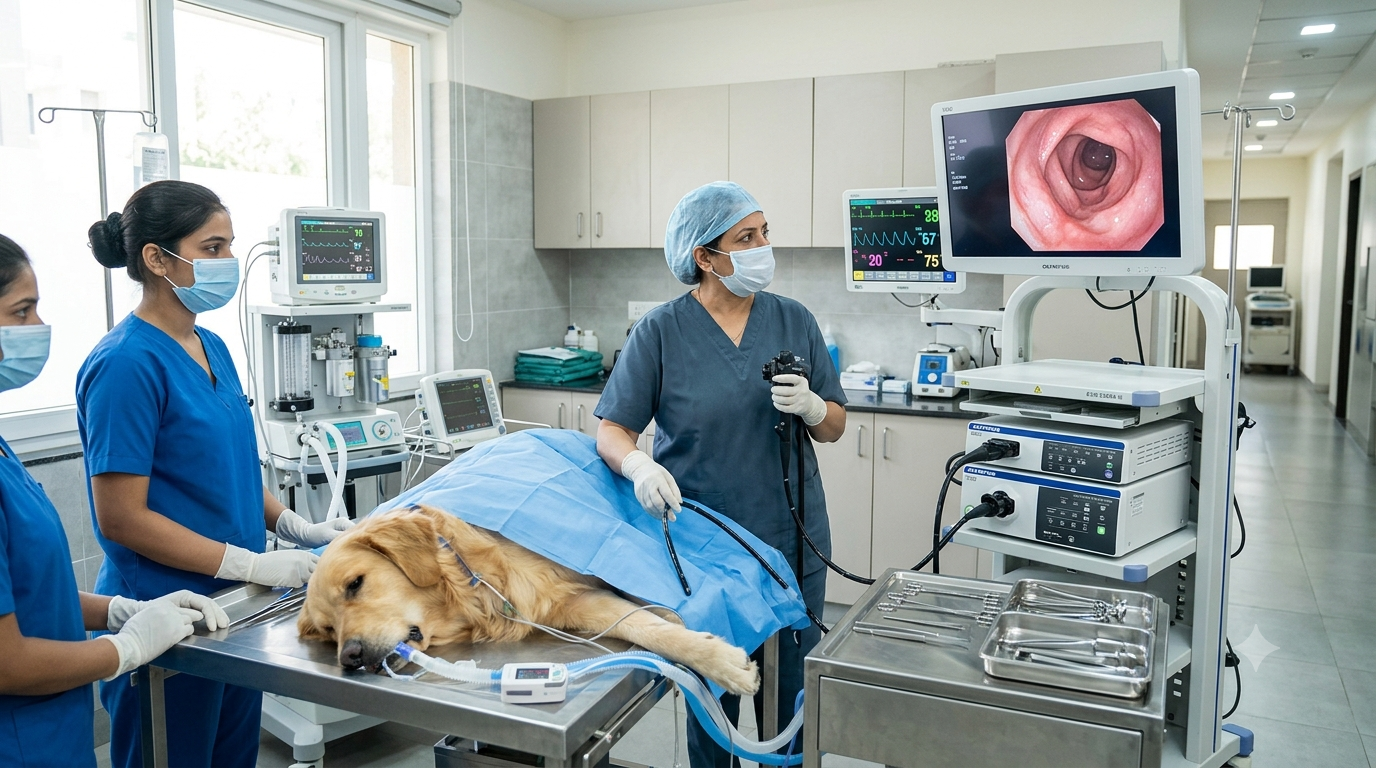
- Endoscopy
- Laboratory services
- Dental X-rays
- Orthopaedic surgery
3. Vetic Gurgaon
Vetic’s Gurgaon emergency-care describes 24/7 doctor and staff availability with complete diagnostics and urgent care at select locations.
Listed services include:
- Blood and biochemistry testing
- Urine analysis
- X-rays
- Imaging
- Endoscopy
- Inpatient care
- Emergency surgery
Important: These descriptions are provider-reported. Confirm that the branch is open, a veterinarian is available and the hospital can manage your pet’s specific problem. An overnight clinic may still refer complex surgery, intensive care or specialist cases.
What to Do Before Travelling to an Emergency Vet

Call Ahead With Concise Information
Tell the veterinary team:
- Your pet’s species
- Age
- Approximate weight
- Symptoms
- When symptoms started
- Breathing status
- Consciousness level
- Known illnesses
- Current medicines
- Possible toxin exposure
- Recent injury or trauma
Ask whether the facility has access to:
- Oxygen
- Imaging
- Blood testing
- Surgery
- Hospitalisation
- Overnight monitoring
Calling ahead allows the veterinary team to prepare for your arrival.
The American Veterinary Medical Association advises pet owners to contact a veterinarian or emergency hospital so the team can be ready when the animal arrives.
Transport Your Pet Safely Through Gurgaon Traffic
Use a carrier for cats and small dogs.
For a large dog, use a leash if it is safe to do so and keep the animal confined in the vehicle.
An injured pet should lie on a firm, stable surface rather than move freely.
Keep the vehicle cool and quiet.
If possible, ask another person to handle navigation and phone calls while you focus on your pet.
If your pet is too injured or unwell to travel safely in a normal vehicle, you can also read our guide to emergency pet ambulance services in Gurgaon.
Take Important Medical Information
Take the following when readily available:
- Medical records
- Current medicines
- Vaccination details
- Toxin packaging
- Relevant photographs
However, do not delay departure to collect paperwork.
If the emergency hospital gives you different first-aid instructions, follow its directions.
How to Choose a Reliable Emergency Hospital Before a Crisis

Do not wait until an accident or medical emergency occurs before searching for a hospital.
Save one primary hospital and one backup option in your phone.
Before an emergency, confirm:
- Exact location
- Phone number
- Night access
- Payment methods
- Veterinarian availability
- Diagnostic facilities
- Inpatient care
- Ambulance or transport support
- Referral arrangements
Create a Pet Emergency Information Note
Your emergency note should include:
- Pet’s name
- Species
- Age
- Weight
- Allergies
- Chronic conditions
- Current medicines
- Microchip details, if applicable
- Regular veterinarian’s phone number
Keep a carrier, leash, towels, gloves, gauze and a basic first-aid kit easily accessible.
First aid is temporary support, not a replacement for professional veterinary treatment.
24-Hour Emergency Vet in Gurgaon FAQ
Is a Home Veterinarian Suitable for an Emergency?
A home visit may suit a stable pet when the veterinarian confirms that it is safe.
Breathing trouble, collapse, poisoning, major trauma, uncontrolled bleeding, seizures, bloat and inability to urinate generally require a hospital with appropriate diagnostics, monitoring, oxygen, surgery or inpatient care.
Can I Wait Until Morning if My Pet Seems Calmer?
No serious warning sign should be dismissed because a pet briefly appears better.
Contact a veterinary professional after collapse, poisoning, trauma, breathing difficulty, repeated vomiting or a seizure and follow the recommended timing.
Should I Give Food, Water or Medicine Before Going?
Do not force food, water or medicine when your pet is vomiting, unconscious, choking, having a seizure or struggling to breathe.
Ask the emergency veterinary team what to do for the specific situation.
What Should I Take to the Hospital?
Take your pet’s medicines and medical records when they are readily available.
If relevant, bring:
- Toxin packaging
- A photograph of the substance
- A sealed sample of vomit or chewed material, if safe to collect
Do not delay transport to collect documents.
How Can I Find a 24-Hour Vet Near My Gurgaon Sector?
Save a primary and backup hospital before an emergency.
Verify the following directly:
- Current phone number
- Exact branch
- Overnight staffing
- Emergency admission process
- Available facilities
Online directory hours may be outdated, so direct confirmation is important.
Final Takeaway
A 24-hour emergency vet in Gurgaon is most useful when pet parents act early.
Recognise dangerous symptoms, call ahead, transport the animal safely and avoid unapproved medicines or home remedies.
Preparing emergency contacts, medical records, a carrier and a backup hospital can reduce delays when urgent veterinary care is needed.
Veterinary safety disclaimer: This article provides general educational information and is not a diagnosis or treatment plan. First aid should be followed by immediate professional veterinary care. For a life-threatening emergency, contact the nearest equipped veterinary hospital or local veterinary professional now.
References