Hydrotherapy is no longer a treatment reserved for elite sporting dogs or specialized veterinary hospitals. Over the last few years, it has become one of the most effective rehabilitation therapies available for dogs recovering from surgery, managing arthritis, living with neurological disorders, or struggling with obesity. As more veterinary hospitals in Gurgaon invest in advanced rehabilitation facilities, pet owners now have access to treatment options that were once difficult to find outside major referral centers.
If your veterinarian has recommended hydrotherapy, it’s natural to have several questions. How much does dog hydrotherapy cost in Gurgaon? How many sessions will my dog need? Is underwater treadmill therapy better than swimming? Will it actually help with recovery, or is it simply another expensive treatment?
The truth is that hydrotherapy is far more than allowing a dog to swim in a pool. It is a carefully supervised rehabilitation program designed by veterinary professionals to improve mobility, reduce pain, rebuild muscle strength, and accelerate healing while placing minimal stress on joints and bones. When used as part of a comprehensive treatment plan, hydrotherapy can significantly improve a dog’s quality of life and, in many cases, shorten recovery time after injury or surgery.
The growing popularity of canine rehabilitation has also led many multi-specialty veterinary hospitals in Gurgaon to introduce dedicated physiotherapy and hydrotherapy services. These facilities often combine underwater treadmill therapy, swimming rehabilitation, therapeutic exercises, pain management, digital imaging, orthopedic surgery, and physiotherapy under one roof, making it easier for pet owners to access comprehensive care.
However, the cost of hydrotherapy varies depending on your dog’s condition, the type of therapy performed, the number of sessions required, and the rehabilitation center you choose.

This comprehensive guide explains dog hydrotherapy cost in Gurgaon in 2026, how hydrotherapy works, which conditions benefit the most, expected treatment duration, recovery, factors affecting pricing, and how to choose the right rehabilitation center for your pet.
What Is Dog Hydrotherapy?
Dog hydrotherapy is a specialized form of veterinary rehabilitation that uses the unique properties of water to help dogs recover from injuries, surgery, neurological disorders, orthopedic conditions, and chronic joint diseases.
Unlike recreational swimming, hydrotherapy is performed under the supervision of trained veterinary professionals or certified rehabilitation therapists who design individualized exercise programs based on each dog’s medical condition, age, weight, mobility, and recovery goals.
The treatment usually takes place in either a temperature-controlled rehabilitation pool or an underwater treadmill. Throughout the session, your dog’s movement, posture, heart rate, and overall comfort are carefully monitored to ensure that each exercise is performed safely and effectively.
One of the biggest advantages of hydrotherapy is that it allows dogs to exercise without placing their full body weight on painful joints or healing bones. The buoyancy of water supports much of the body’s weight, making movement easier while still providing enough resistance to strengthen muscles.
Because of these benefits, hydrotherapy has become an important part of modern veterinary rehabilitation and is now widely recommended after orthopedic surgery, ligament injuries, fractures, neurological disorders, arthritis, obesity management, and age-related mobility problems.
Why Water Therapy Works So Well
Many pet owners wonder why veterinarians recommend exercising in water instead of on land. The answer lies in the unique physical properties of water, which create an ideal rehabilitation environment.
Buoyancy Reduces Joint Stress
When a dog enters water, buoyancy supports a significant portion of its body weight. This reduces pressure on painful joints, healing bones, and damaged ligaments while allowing smoother movement.
For dogs recovering from surgery or suffering from arthritis, this reduced weight-bearing makes exercise much more comfortable than walking on hard ground.
Water Resistance Builds Muscle
Although water makes movement easier on the joints, it also creates natural resistance in every direction. Each step requires muscles to work harder than they would on land, helping rebuild strength without using heavy weights or high-impact exercises.
This combination of low impact and high resistance makes hydrotherapy particularly effective during rehabilitation.
Warm Water Improves Flexibility
Most veterinary hydrotherapy pools are maintained at carefully controlled temperatures. Warm water helps relax tight muscles, improve blood circulation, reduce stiffness, and increase joint flexibility, making movement more comfortable for recovering dogs.
Hydrostatic Pressure Supports Recovery
Water also applies gentle, even pressure around the body. This hydrostatic pressure may help improve circulation, reduce mild swelling, and provide additional support during movement, allowing many dogs to exercise with greater confidence.
Together, these principles explain why hydrotherapy has become one of the most effective rehabilitation techniques in veterinary medicine.

When Does a Dog Need Hydrotherapy?
Hydrotherapy is not limited to dogs recovering from surgery. Veterinarians recommend it for a wide range of orthopedic, neurological, and chronic medical conditions where controlled exercise can improve recovery and long-term mobility.
Dogs recovering from cranial cruciate ligament (CCL) surgery, TPLO procedures, fracture repair, or joint stabilization surgery often begin hydrotherapy once the veterinarian determines that healing has progressed sufficiently. Controlled water exercises help rebuild muscle mass while protecting healing tissues from excessive stress.
Dogs with hip dysplasia, elbow dysplasia, arthritis, and degenerative joint disease also benefit because hydrotherapy improves joint movement while minimizing discomfort caused by weight-bearing activities.
Neurological disorders such as intervertebral disc disease (IVDD), spinal injuries, nerve damage, and partial paralysis are another common indication. Carefully supervised exercises help improve coordination, balance, muscle strength, and mobility while supporting neurological rehabilitation.
Hydrotherapy is also widely used for overweight dogs that struggle to exercise on land. The buoyancy of water allows these dogs to burn calories and improve cardiovascular fitness without placing excessive pressure on their joints.
Senior dogs experiencing muscle loss, reduced flexibility, or age-related stiffness may also benefit from individualized hydrotherapy programs designed to maintain mobility and improve overall quality of life.
Even athletic and working dogs sometimes undergo hydrotherapy as part of conditioning programs to improve endurance, maintain muscle strength, and reduce the risk of injury.
Dog Hydrotherapy Cost in Gurgaon (2026)
The cost of hydrotherapy varies depending on the rehabilitation center, the type of equipment used, your dog’s medical condition, and the duration of the treatment program.
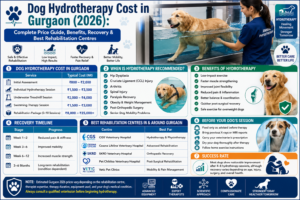
In Gurgaon, an initial rehabilitation consultation generally costs between ₹800 and ₹2,000, during which the veterinarian or rehabilitation specialist evaluates your dog’s condition, reviews previous medical records, and develops a customized therapy plan.
Individual hydrotherapy sessions usually range from ₹1,000 to ₹3,000 per session, depending on whether swimming therapy or underwater treadmill therapy is used and how long the session lasts.
Many rehabilitation centers also offer discounted packages for dogs requiring long-term treatment. Multi-session packages often reduce the average cost per session and are commonly recommended for dogs recovering from orthopedic surgery or neurological disorders that require several weeks of rehabilitation.
Additional charges may apply if physiotherapy exercises, laser therapy, pain management, veterinary consultations, medications, or follow-up assessments are included as part of the rehabilitation program.
Although hydrotherapy may appear expensive initially, it often helps improve mobility, reduce complications, and accelerate recovery, potentially lowering the need for prolonged medication or additional treatments later.
What Factors Affect Dog Hydrotherapy Cost?
Hydrotherapy costs can vary considerably from one rehabilitation center to another because every dog requires a personalized treatment plan. The final price depends not only on the therapy itself but also on your dog’s medical condition, the equipment used, the expertise of the rehabilitation team, and the number of sessions recommended.
One of the biggest factors is the type of rehabilitation required. Dogs recovering from routine orthopedic surgery generally require a straightforward rehabilitation program, while pets with neurological disorders, paralysis, or multiple injuries often need longer and more specialized sessions.
The size of your dog can also influence the cost. Larger breeds may require more therapist assistance, larger rehabilitation equipment, longer treatment times, and additional monitoring during each session.
The rehabilitation facility itself also plays an important role. Multi-specialty veterinary hospitals equipped with underwater treadmills, digital imaging, orthopedic specialists, physiotherapy units, and emergency care usually charge more than smaller rehabilitation centers because they provide comprehensive medical support under one roof.
Another factor is the duration of the rehabilitation program. Some dogs recover after only a few sessions, while others require therapy over several weeks or even months. Purchasing rehabilitation packages is often more economical than paying for individual sessions.
Additional services such as physiotherapy, laser therapy, acupuncture, gait analysis, pain management, follow-up consultations, or repeat veterinary examinations may also increase the overall treatment cost.
Underwater Treadmill vs Swimming Therapy
Many pet owners assume that swimming and hydrotherapy are the same thing. While both involve water-based exercise, they serve different purposes and are used for different medical conditions.

Underwater Treadmill Therapy
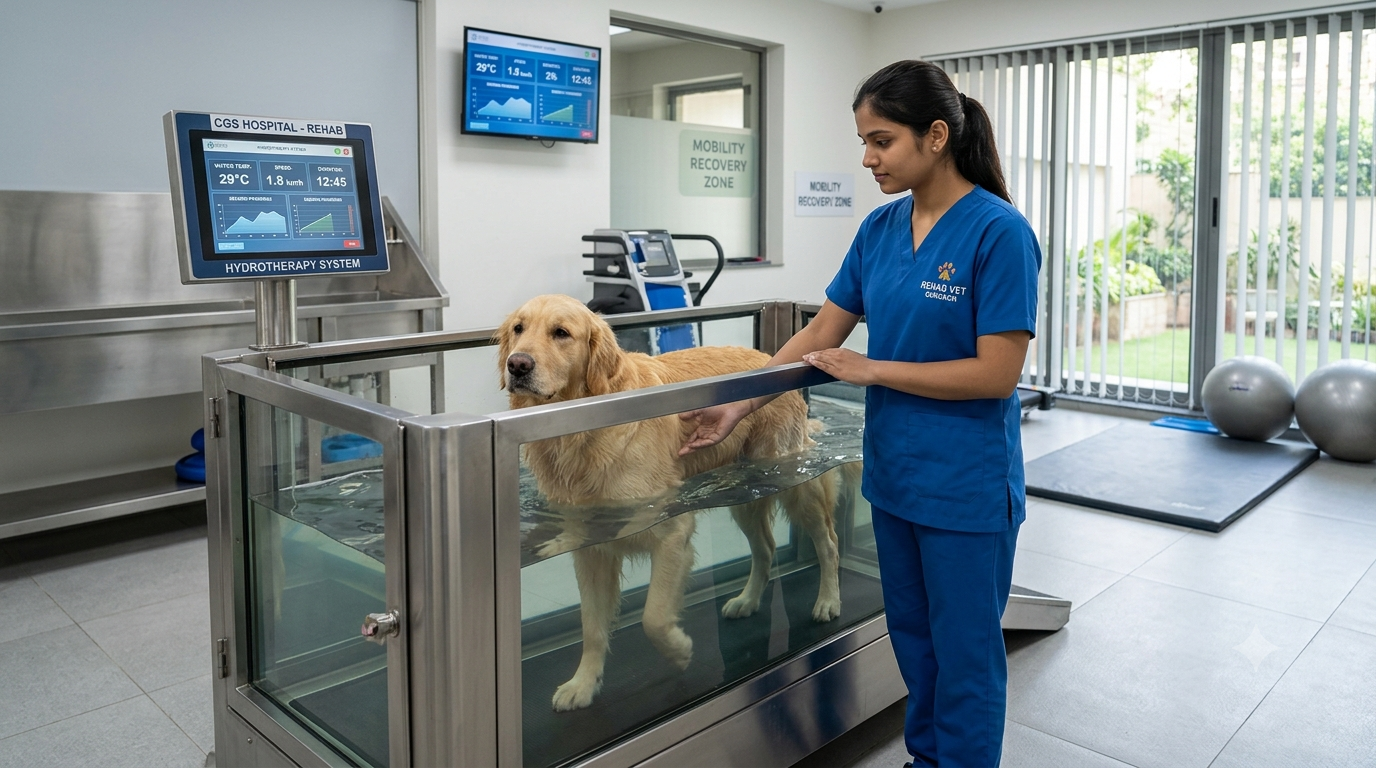
The underwater treadmill has become one of the most advanced rehabilitation tools in veterinary medicine. During treatment, the dog walks inside a specially designed enclosed treadmill while warm water is gradually filled to an appropriate level.
Because the therapist can control the water depth, treadmill speed, and session duration, exercises can be adjusted precisely according to the dog’s recovery stage.
This controlled environment makes underwater treadmill therapy particularly beneficial for dogs recovering from TPLO surgery, cruciate ligament injuries, fractures, arthritis, hip dysplasia, neurological disorders, and muscle weakness.
Many rehabilitation specialists prefer underwater treadmills because they allow dogs to maintain a natural walking pattern while significantly reducing stress on painful joints.
Swimming Therapy
Swimming rehabilitation takes place in specially designed therapeutic pools under constant supervision.
Unlike underwater treadmills, swimming requires dogs to use nearly every major muscle group simultaneously, making it excellent for improving cardiovascular fitness, endurance, muscle development, and weight management.
Swimming is particularly useful for overweight dogs, athletic breeds, and pets recovering from certain orthopedic conditions after initial healing has occurred.
However, not every dog is comfortable in deep water. Dogs recovering from some neurological conditions or those with poor balance may benefit more from an underwater treadmill during the early stages of rehabilitation because it provides additional stability.
In many rehabilitation programs, veterinarians combine both therapies to maximize recovery while gradually increasing strength and endurance.
What Happens During a Hydrotherapy Session?
Many first-time pet owners feel anxious before their dog’s first appointment because they are unsure what to expect. In reality, hydrotherapy sessions are carefully structured and progress at a pace that matches each dog’s comfort level and medical needs.

1. Initial Assessment
Every rehabilitation program begins with a detailed veterinary evaluation. The rehabilitation specialist reviews your dog’s medical history, previous surgeries, diagnostic imaging, medications, and current mobility.
Walking patterns, joint movement, muscle condition, balance, and pain levels are assessed before designing an individualized exercise plan.
2. Water Acclimatization
Not every dog enjoys entering water immediately. Dogs that are unfamiliar with hydrotherapy are introduced gradually in a calm environment.
Experienced therapists use positive reinforcement and gentle encouragement to help nervous dogs become comfortable before beginning therapeutic exercises.
3. Controlled Exercise
Once your dog is relaxed, supervised exercises begin.
Depending on the treatment plan, your dog may walk on an underwater treadmill, perform controlled swimming exercises, or complete specific rehabilitation movements designed to improve strength, coordination, flexibility, and balance.
Throughout the session, therapists monitor posture, gait, breathing, and fatigue to ensure exercises remain safe and effective.
4. Cool Down and Monitoring
After the therapy session, your dog is dried thoroughly and allowed to rest while the rehabilitation team evaluates recovery, comfort, and overall progress.
Recommendations for home exercises, activity restrictions, or future appointments are discussed before your dog returns home.
How Many Hydrotherapy Sessions Does a Dog Need?
There is no fixed number of sessions because every rehabilitation program is tailored to the individual dog.
Dogs recovering from routine orthopedic surgery may begin showing significant improvement after six to ten sessions, while neurological rehabilitation often requires longer treatment programs lasting several months.
Dogs with arthritis usually benefit from ongoing maintenance sessions that help preserve joint mobility and reduce stiffness rather than completely eliminating the underlying condition.
Obese dogs participating in hydrotherapy for weight management often continue therapy alongside dietary changes until their target weight and fitness level are achieved.
Your veterinarian regularly evaluates progress throughout the rehabilitation program and adjusts the frequency of sessions based on improvements in strength, mobility, and overall comfort.
Conditions That Commonly Benefit from Hydrotherapy
Hydrotherapy supports recovery from numerous orthopedic, neurological, and chronic medical conditions.
Some of the most common include cruciate ligament injuries, TPLO recovery, fracture rehabilitation, hip dysplasia, elbow dysplasia, arthritis, intervertebral disc disease (IVDD), spinal injuries, muscle atrophy, obesity, neurological weakness, tendon injuries, ligament damage, post-operative rehabilitation, age-related mobility decline, and chronic joint disorders.
It is also increasingly used for conditioning working dogs, agility dogs, and highly active breeds that require controlled muscle strengthening while minimizing injury risk.
Because every condition affects mobility differently, rehabilitation programs are customized to meet each dog’s specific medical needs rather than following a standard exercise routine.
Is Hydrotherapy Safe for Dogs?
When performed under veterinary supervision, hydrotherapy is considered one of the safest rehabilitation treatments available.
Every session is supervised by trained professionals who carefully monitor your dog’s breathing, fatigue level, movement, heart rate, and comfort throughout the exercise program.
Water quality, temperature, hygiene, and equipment maintenance are also carefully controlled in reputable rehabilitation facilities to reduce the risk of infection or injury.
While most dogs adapt well to hydrotherapy, treatment is never forced. Rehabilitation progresses gradually so that dogs gain confidence while improving strength safely.
Because hydrotherapy places less stress on joints than land-based exercise, many dogs are able to begin controlled rehabilitation earlier than they otherwise could after surgery or injury.

When Is Hydrotherapy Not Recommended?
Although hydrotherapy is highly beneficial for many dogs, it is not suitable for every medical condition. Before beginning treatment, every dog should undergo a thorough veterinary examination to determine whether water-based rehabilitation is safe.
Dogs with open wounds, active skin infections, contagious diseases, uncontrolled seizures, severe heart disease, advanced respiratory disorders, or unstable fractures may need alternative treatment until their condition improves.
Hydrotherapy may also be postponed if a dog has recently undergone surgery and the incision has not healed completely. Entering the water too early can increase the risk of infection and interfere with normal wound healing.
Some dogs experience significant anxiety around water. While experienced rehabilitation therapists use gradual acclimatization techniques and positive reinforcement, therapy should never be forced. Building confidence slowly usually results in better long-term outcomes.
The safest approach is to follow your veterinarian’s recommendations and begin hydrotherapy only when your dog is medically ready.
Recovery and Progress During Hydrotherapy
Every dog’s recovery timeline is different. Factors such as age, breed, fitness level, medical condition, body weight, and overall health all influence how quickly improvements become noticeable.
Some dogs recovering from orthopedic surgery begin walking more comfortably after only a few sessions, while pets with chronic arthritis or neurological disorders often require longer rehabilitation programs before significant changes are seen.
One of the biggest advantages of hydrotherapy is that improvements are usually gradual and sustainable. Instead of simply masking pain, controlled exercises help rebuild muscle strength, improve joint flexibility, enhance coordination, and restore confidence in movement.
Veterinarians often combine hydrotherapy with physiotherapy, medication, weight management, home exercise programs, and regular follow-up examinations to achieve the best possible outcome.
Pet owners also play an important role in recovery. Following activity restrictions, administering medications as prescribed, maintaining a healthy body weight, and attending scheduled rehabilitation sessions all contribute to better long-term results.
Benefits of Hydrotherapy Compared with Traditional Exercise
Traditional walks and outdoor exercise are important for healthy dogs, but they may not be appropriate during recovery from surgery or serious orthopedic injuries.
Hydrotherapy offers several unique advantages that conventional exercise cannot provide.
Because water supports a significant portion of the body’s weight, dogs can move comfortably without placing excessive stress on healing joints or bones. This allows earlier rehabilitation while reducing discomfort during movement.
The natural resistance created by water strengthens muscles in every direction without requiring high-impact activity. This helps restore muscle mass more efficiently while protecting injured tissues.
Warm water also improves circulation, reduces muscle stiffness, increases flexibility, and encourages smoother joint movement. Many dogs with arthritis appear noticeably more comfortable after regular hydrotherapy sessions because exercise becomes easier and less painful.
Perhaps the greatest advantage is the controlled environment. Every movement is supervised by trained rehabilitation professionals who adjust the exercise intensity according to your dog’s progress, ensuring safe and gradual improvement.
Choosing the Best Dog Hydrotherapy Centre in Gurgaon
As hydrotherapy becomes more widely available, choosing the right rehabilitation center is just as important as understanding the treatment itself.
Look for facilities where hydrotherapy is integrated into a comprehensive veterinary rehabilitation program rather than offered as a standalone service. Access to experienced veterinarians, rehabilitation therapists, orthopedic specialists, physiotherapy, diagnostic imaging, and emergency care ensures that your dog receives coordinated treatment if additional medical attention becomes necessary.
Ask whether the facility uses an underwater treadmill, therapeutic swimming pool, or both. Each serves different rehabilitation goals, and having multiple treatment options allows therapists to customize exercises according to your dog’s condition.
Cleanliness and water hygiene are equally important. Reputable centers maintain strict sanitation protocols, monitor water quality regularly, and keep water temperatures within a comfortable therapeutic range.
Before beginning treatment, discuss the rehabilitation plan in detail. A quality center should explain the expected number of sessions, treatment goals, progress evaluations, home-care recommendations, estimated costs, and realistic recovery expectations rather than promising immediate results.
Reading reviews, seeking recommendations from your primary veterinarian, and visiting the rehabilitation facility beforehand can also help you make an informed decision.

Common Myths About Dog Hydrotherapy
Despite becoming increasingly popular, hydrotherapy is still surrounded by several misconceptions.
One common myth is that hydrotherapy simply means allowing a dog to swim. In reality, veterinary hydrotherapy involves carefully planned rehabilitation exercises performed under professional supervision using specialized equipment and individualized treatment protocols.
Another misconception is that every dog enjoys water. While many dogs adapt well to therapy, some require gradual introduction and positive reinforcement before becoming comfortable in the rehabilitation environment.
Some pet owners also believe hydrotherapy can completely replace surgery or medication. In most cases, it works best as part of a comprehensive treatment plan alongside veterinary care, physiotherapy, medication, and appropriate home management.
There is also a misconception that hydrotherapy is only for senior dogs. In fact, puppies recovering from orthopedic procedures, active sporting dogs, overweight pets, and dogs with neurological disorders may all benefit from professionally supervised rehabilitation.
When Should You Contact a Veterinarian Immediately?
Hydrotherapy is intended to support recovery, not replace emergency medical treatment.
If your dog suddenly becomes unable to stand, develops severe pain, experiences difficulty breathing, collapses, loses bladder control unexpectedly, refuses to bear weight on a limb after an injury, or shows signs of paralysis, immediate veterinary attention is essential.
Similarly, if your dog develops swelling, persistent limping, wound discharge, fever, or worsening pain during a rehabilitation program, contact your veterinarian before continuing further sessions.
Early medical intervention often prevents complications and allows rehabilitation to continue safely once the underlying problem has been addressed.

Final Thoughts
Hydrotherapy has become one of the most valuable rehabilitation treatments in modern veterinary medicine, offering dogs a safe and effective way to recover from surgery, orthopedic injuries, arthritis, neurological disorders, obesity, and many other mobility-related conditions. By using the natural properties of water to reduce joint stress while strengthening muscles, hydrotherapy allows many dogs to regain confidence, improve movement, and return to a more active lifestyle with less discomfort.
In Gurgaon, the cost of dog hydrotherapy generally ranges from ₹1,000 to ₹3,000 per session, while the initial rehabilitation consultation typically costs ₹800 to ₹2,000. The total investment depends on your dog’s diagnosis, the complexity of the rehabilitation program, the number of sessions required, and the facilities available at the veterinary center.