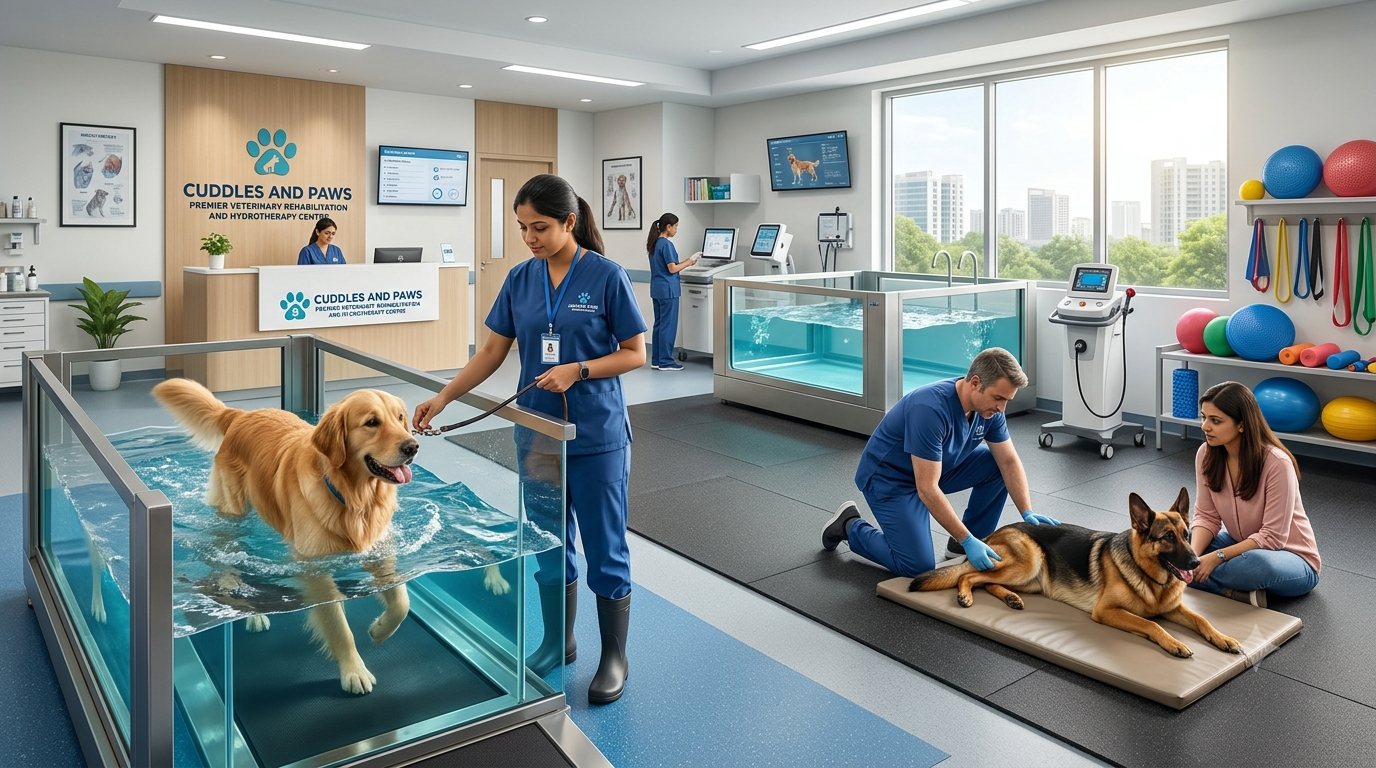
Dog physiotherapy has become one of the fastest-growing fields in veterinary medicine, helping thousands of dogs recover from surgery, injuries, arthritis, neurological disorders, and age-related mobility problems. Years ago, pet owners had limited options once a dog developed paralysis, hip dysplasia, or ligament injuries. Today, advanced veterinary rehabilitation techniques allow many dogs to regain strength, improve mobility, reduce pain, and enjoy a significantly better quality of life.
If your veterinarian has suggested physiotherapy for your dog, you’re probably wondering how much it costs, what treatments are involved, how long recovery takes, and whether it is truly worth the investment. The good news is that modern canine rehabilitation is no longer limited to elite referral hospitals. Several veterinary hospitals and rehabilitation centers in Gurgaon now provide specialized physiotherapy services using advanced equipment and evidence-based treatment techniques.
In Gurgaon, the average cost of dog physiotherapy ranges from ₹800 to ₹3,500 per session, while specialized rehabilitation packages, hydrotherapy, laser therapy, and post-surgical recovery programs may cost more depending on the complexity of your dog’s condition. Every rehabilitation plan is customized based on age, breed, diagnosis, mobility level, pain severity, and recovery goals.
This complete guide explains everything you need to know about Dog Physiotherapy in Gurgaon, including treatment costs, rehabilitation methods, hydrotherapy, laser therapy, neurological rehabilitation, recovery timelines, home exercises, choosing the right physiotherapist, and what to expect throughout your dog’s recovery journey.

Dog Physiotherapy Cost in Gurgaon (2026)
Before beginning treatment, most pet owners want a realistic estimate of the expenses involved. Physiotherapy costs vary depending on the hospital, therapist’s expertise, treatment modality, session duration, and the medical condition being treated.
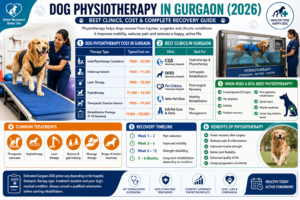
These prices are indicative and may vary based on your dog’s size, diagnosis, the number of sessions required, and whether multiple therapies are combined into one rehabilitation program.
What Is Dog Physiotherapy?
Dog physiotherapy, also known as canine rehabilitation, is a specialized branch of veterinary medicine that focuses on restoring movement, reducing pain, rebuilding muscle strength, and improving mobility after injury, surgery, or neurological disease.
Rather than relying solely on medication, physiotherapy combines scientifically proven rehabilitation techniques that encourage the body’s natural healing process. Carefully designed exercises stimulate muscles, improve joint flexibility, enhance circulation, reduce inflammation, and help dogs regain confidence while walking.
Modern veterinary physiotherapy is widely recommended after orthopedic surgeries, spinal surgeries, ligament injuries, fractures, arthritis, hip dysplasia, paralysis, obesity-related mobility issues, and many neurological disorders.
Every rehabilitation program is individualized. A young Labrador recovering from cruciate ligament surgery requires a very different treatment plan from an elderly Golden Retriever with arthritis or a Dachshund recovering from intervertebral disc disease (IVDD).

How Does Canine Physiotherapy Work?
When a dog experiences an injury or undergoes surgery, muscles begin to weaken because they are not being used normally. Joint stiffness increases, circulation slows down, and pain often discourages movement. If this continues for weeks, recovery becomes more difficult.
Physiotherapy interrupts this cycle by gradually restoring normal movement while protecting healing tissues. Controlled exercises strengthen weakened muscles, improve joint mobility, enhance nerve function, and reduce pain without placing excessive stress on recovering structures.
Specialized equipment such as therapeutic lasers, underwater treadmills, electrical stimulation devices, balance boards, and rehabilitation balls allows therapists to target specific muscles and joints safely.
The result is faster recovery, better long-term mobility, reduced dependence on pain medication, and an improved quality of life.
Signs Your Dog May Need Physiotherapy
Many owners assume physiotherapy is only useful after surgery, but rehabilitation can benefit dogs suffering from a wide variety of conditions.
Common signs include difficulty standing after resting, limping that persists for several weeks, reluctance to climb stairs, stiffness after exercise, reduced activity, muscle loss, dragging of the hind legs, poor balance, chronic joint pain, decreased flexibility, weakness following surgery, or recovery after fractures.
Dogs experiencing paralysis, spinal injuries, neurological disorders, or age-related mobility decline often benefit significantly from structured rehabilitation programs supervised by trained veterinary physiotherapists.
Conditions Commonly Treated with Dog Physiotherapy
Veterinary rehabilitation is now considered an essential component of treatment for many orthopedic and neurological disorders.
Physiotherapy is commonly recommended for hip dysplasia, elbow dysplasia, cruciate ligament (CCL/ACL) injuries, TPLO recovery, patellar luxation, fracture repair, femoral head ostectomy (FHO), arthritis, degenerative joint disease, obesity-related mobility issues, intervertebral disc disease (IVDD), spinal surgery recovery, paralysis, nerve injuries, muscle strains, tendon injuries, sports injuries, chronic pain, age-related weakness, post-operative rehabilitation, and balance disorders.
In many cases, rehabilitation begins within days after surgery under veterinary supervision, helping reduce complications and speed up recovery.
Benefits of Dog Physiotherapy
One of the greatest advantages of physiotherapy is that it addresses the underlying cause of mobility problems rather than simply masking pain.
Regular rehabilitation sessions help reduce inflammation, strengthen muscles, improve flexibility, restore normal walking patterns, increase joint range of motion, improve circulation, reduce swelling, accelerate tissue healing, prevent muscle wasting, improve coordination, enhance balance, reduce dependence on long-term pain medication, and improve overall physical fitness.
Many owners also notice improvements in their dog’s confidence, energy levels, and willingness to participate in daily activities once rehabilitation begins.

Why Early Physiotherapy Matters
Timing plays a crucial role in successful rehabilitation. Waiting several weeks after surgery or injury often allows muscles to weaken, joints to stiffen, and compensatory movement patterns to develop.
Early intervention helps maintain muscle mass, preserve joint mobility, reduce scar tissue formation, and encourage proper healing. It also decreases the likelihood of secondary injuries caused by uneven weight-bearing or abnormal gait patterns.
Veterinarians often recommend beginning gentle rehabilitation soon after surgery, progressing gradually as healing continues.
Dog Physiotherapy vs Pain Medication
Pain medications remain an important part of veterinary treatment, especially during the initial stages of recovery. However, medication alone cannot rebuild muscle strength, improve flexibility, or restore normal movement.
Physiotherapy complements medical treatment by addressing the physical limitations that remain after pain has been controlled.
| Pain Medication | Physiotherapy |
|---|---|
| Reduces pain | Restores mobility |
| Controls inflammation | Builds muscle strength |
| Temporary symptom relief | Long-term functional improvement |
| Does not improve flexibility | Increases joint movement |
| Cannot retrain walking | Corrects gait abnormalities |
For many orthopedic and neurological conditions, combining medication with physiotherapy produces the best recovery outcomes.
Which Dog Breeds Commonly Need Physiotherapy?
Although any dog can benefit from rehabilitation, certain breeds have a higher risk of orthopedic and neurological conditions.
Large breeds such as Labrador Retrievers, Golden Retrievers, German Shepherds, Rottweilers, Saint Bernards, Great Danes, and Dobermans frequently require physiotherapy due to hip dysplasia, arthritis, cruciate ligament injuries, and spinal problems.
Smaller breeds including Dachshunds, Beagles, Shih Tzus, Cocker Spaniels, Pugs, French Bulldogs, and Corgis often undergo rehabilitation for spinal disorders, patellar luxation, or neurological diseases.
Senior dogs of all breeds also benefit from physiotherapy to maintain muscle strength, reduce stiffness, and improve mobility as they age.
Is Dog Physiotherapy Worth the Cost?
Many owners hesitate when they first hear the estimated cost of rehabilitation. However, physiotherapy should be viewed as an investment in your dog’s long-term health rather than simply another medical expense.
Effective rehabilitation can shorten recovery time, reduce complications, minimize future orthopedic problems, improve surgical outcomes, decrease long-term medication use, and help dogs regain independence much sooner.
For active working dogs, senior pets, and dogs recovering from major surgery, physiotherapy often becomes one of the most valuable components of their overall treatment plan.
Advanced Dog Physiotherapy Techniques Used in Gurgaon
Modern veterinary rehabilitation is far more advanced than simple massage or assisted walking. Today’s physiotherapy programs combine multiple evidence-based techniques that work together to relieve pain, restore muscle strength, improve joint function, and accelerate healing. Depending on your dog’s condition, a veterinary physiotherapist may recommend one or several therapies as part of a personalized rehabilitation plan.

1. Hydrotherapy for Dogs
Hydrotherapy is one of the most effective rehabilitation methods for dogs recovering from orthopedic surgery, arthritis, neurological disorders, obesity, and muscle weakness. Water naturally supports a dog’s body weight, allowing movement with significantly less stress on painful joints and healing bones.
The resistance created by water strengthens muscles while improving endurance and flexibility. Since buoyancy reduces pressure on joints, dogs can perform movements in water that would otherwise be difficult or painful on land.
Hydrotherapy is particularly beneficial for dogs recovering from TPLO surgery, hip dysplasia, elbow dysplasia, cruciate ligament injuries, arthritis, spinal surgery, and obesity-related mobility problems. Many senior dogs also experience noticeable improvements in flexibility and comfort after regular hydrotherapy sessions.
Most rehabilitation centers use temperature-controlled pools to ensure comfort while minimizing muscle stiffness. Session duration is gradually increased as the dog’s strength improves.
2. Underwater Treadmill Therapy
Underwater treadmill therapy combines the benefits of hydrotherapy with controlled walking exercises. The dog walks on a treadmill enclosed within a water-filled chamber where the water level can be adjusted according to the rehabilitation goal.
The water supports the dog’s weight while providing gentle resistance, allowing muscles to strengthen without placing excessive stress on healing joints or bones.
This therapy is widely recommended after orthopedic surgeries, ligament injuries, spinal disorders, paralysis, and obesity management because it encourages proper walking patterns while improving cardiovascular fitness.
Veterinary physiotherapists can adjust treadmill speed, water depth, and exercise duration to match each dog’s progress.
3. Therapeutic Laser Therapy
Laser therapy has become one of the most commonly used rehabilitation techniques in veterinary medicine. It uses concentrated light energy to stimulate cellular repair, reduce inflammation, improve circulation, and relieve pain without surgery or medication.
The treatment is completely non-invasive and usually takes only a few minutes. Many dogs remain calm throughout the procedure because it is painless.
Laser therapy is commonly recommended for arthritis, tendon injuries, ligament strains, postoperative healing, chronic pain, spinal conditions, muscle injuries, and wound healing.
Repeated sessions often produce gradual improvements in comfort, mobility, and tissue repair.
4. Electrical Stimulation Therapy (TENS)
Transcutaneous Electrical Nerve Stimulation (TENS) uses low-voltage electrical impulses to reduce pain by stimulating sensory nerves. The treatment also encourages the release of natural pain-relieving chemicals within the body.
TENS is particularly useful for dogs experiencing chronic pain, arthritis, postoperative discomfort, muscle soreness, and neurological rehabilitation.
The electrical impulses are gentle and carefully controlled by trained professionals to ensure patient comfort.
5. Neuromuscular Electrical Stimulation (NMES)
Unlike TENS, which primarily targets pain relief, Neuromuscular Electrical Stimulation (NMES) focuses on muscle contraction. Controlled electrical stimulation activates weakened muscles that are not being used effectively after surgery or prolonged inactivity.
NMES is frequently recommended for dogs recovering from paralysis, spinal injuries, ligament surgery, fractures, prolonged cage rest, and severe muscle wasting.
As muscle strength gradually returns, voluntary movement becomes easier and overall recovery accelerates.
6. Interferential Therapy (IFT)
Interferential Therapy uses medium-frequency electrical currents that penetrate deeper into tissues than conventional electrical stimulation.
This therapy helps reduce pain, decrease swelling, improve blood circulation, and promote tissue healing while remaining comfortable for most dogs.
IFT is often included in rehabilitation programs for chronic arthritis, joint injuries, muscle strains, and postoperative pain management.
7. Therapeutic Ultrasound
Therapeutic ultrasound differs completely from diagnostic ultrasound used for imaging internal organs.
In physiotherapy, ultrasound delivers sound waves deep into muscles, tendons, ligaments, and connective tissues. The resulting therapeutic heat increases circulation, reduces muscle spasms, softens scar tissue, and accelerates tissue repair.
Dogs recovering from tendon injuries, ligament damage, chronic muscle stiffness, and joint disorders often respond well to ultrasound therapy when combined with exercise-based rehabilitation.
8. Infrared Therapy
Infrared therapy uses specific wavelengths of light to improve circulation and reduce pain within affected tissues.
Improved blood flow delivers oxygen and nutrients needed for healing while helping remove inflammatory waste products from injured muscles and joints.
Many rehabilitation centers incorporate infrared therapy before stretching exercises because warm muscles respond more effectively to treatment.
9. Manual Therapy
Manual therapy involves skilled hands-on techniques performed by experienced veterinary physiotherapists.
Gentle joint mobilization, soft tissue manipulation, stretching, and muscle release techniques improve flexibility while reducing stiffness and discomfort.
Manual therapy also helps restore normal movement patterns after prolonged inactivity or surgery.
Dogs recovering from orthopedic procedures often become more comfortable when manual therapy is incorporated into their rehabilitation program.
10. Myofascial Release Therapy (MFR)
Myofascial Release focuses on relieving tension within the connective tissues that surround muscles.
Following injury or surgery, fascia may become tight and restrict movement. Gentle sustained pressure applied by trained therapists gradually releases these restrictions, improving flexibility and reducing discomfort.
This therapy is especially valuable for dogs with chronic muscle tightness, compensatory movement patterns, and long-standing orthopedic conditions.
11. Passive Range of Motion (PROM) Exercises
Passive Range of Motion exercises involve carefully moving joints through their normal range without requiring the dog to actively use the muscles.
PROM helps maintain flexibility, reduce stiffness, improve joint lubrication, and prevent contractures during periods of limited mobility.
These exercises are commonly introduced soon after surgery under veterinary supervision.
12. Active Range of Motion Exercises
As healing progresses, dogs begin performing controlled movements independently.
Walking over poles, climbing gentle slopes, navigating obstacles, and performing sit-to-stand exercises strengthen muscles while improving coordination and balance.
These exercises gradually restore confidence and prepare dogs for normal daily activities.
13. Balance and Proprioception Training
Many neurological and orthopedic conditions reduce a dog’s awareness of limb position.
Balance training teaches the nervous system to coordinate movement more effectively using specialized equipment such as balance discs, wobble boards, foam pads, and stability cushions.
Improved proprioception reduces the risk of future injuries while restoring confident movement.
14. Peanut Ball Therapy
Large peanut-shaped rehabilitation balls provide an unstable surface that activates core muscles during exercise.
Dogs carefully perform balance exercises while supported by the therapist, strengthening abdominal muscles, spinal stabilizers, and hind limb muscles.
This technique is widely used after spinal surgery, neurological rehabilitation, and orthopedic recovery.
15. Medicine Ball Exercises
Medicine ball exercises improve coordination, posture, muscle strength, and controlled weight shifting.
Veterinary physiotherapists customize these exercises according to each dog’s condition, gradually increasing difficulty as rehabilitation progresses.
These exercises are especially useful for athletic dogs returning to sporting activities.
Condition-Specific Rehabilitation Programs
Every rehabilitation plan differs depending on the underlying diagnosis. A dog recovering from spinal surgery requires a completely different approach than one recovering from arthritis or ligament repair.
1. Physiotherapy After TPLO Surgery
TPLO surgery is commonly performed to stabilize cruciate ligament injuries in dogs.
Rehabilitation usually begins with pain management, passive exercises, and controlled leash walking before progressing to muscle strengthening, underwater treadmill therapy, and advanced balance exercises.
Most dogs require structured rehabilitation for several weeks to restore normal limb function and reduce the risk of reinjury.
2. Physiotherapy for IVDD (Intervertebral Disc Disease)
IVDD affects the spinal discs and is particularly common in Dachshunds, Beagles, Corgis, and French Bulldogs.
Rehabilitation focuses on restoring neurological function, rebuilding muscle strength, improving coordination, and retraining walking ability.
Depending on the severity of spinal cord damage, recovery may continue for several months.
3. Physiotherapy for Hip Dysplasia
Hip dysplasia cannot always be cured without surgery, but physiotherapy significantly improves mobility and comfort.
Weight management, hydrotherapy, muscle strengthening, stretching, and laser therapy help reduce pain while improving joint stability.
Many dogs maintain an active lifestyle for years with consistent rehabilitation.
4. Physiotherapy for Arthritis
Arthritis is one of the most common mobility problems in older dogs.
A comprehensive rehabilitation program helps reduce stiffness, strengthen supporting muscles, improve flexibility, and maintain independence.
Gentle exercises combined with laser therapy and hydrotherapy often provide long-term pain relief.
5. Rehabilitation After Fracture Repair
Following fracture surgery, controlled rehabilitation restores muscle strength while protecting healing bones.
Therapists gradually increase weight-bearing exercises, balance training, and walking distance as bone healing progresses.
Attempting unrestricted activity too early can delay recovery, making professional supervision essential.
Recovery Timelines: What Pet Owners Can Expect
Every dog’s recovery journey is unique. Factors such as age, breed, overall health, the underlying medical condition, surgical procedure, and consistency of rehabilitation all influence how quickly progress is achieved. While some dogs show improvement within a few sessions, others recovering from neurological disorders or major orthopedic surgery may require several months of structured physiotherapy.

The following timelines provide a general idea of what many pet owners can expect during rehabilitation.
1. Week 1–2: Pain Management and Gentle Mobility
During the initial phase, the primary focus is reducing pain, controlling inflammation, protecting healing tissues, and maintaining joint flexibility.
Therapists usually begin with passive range-of-motion exercises, gentle stretching, assisted standing, short leash walks, laser therapy, and pain management techniques. Dogs recovering from surgery are closely monitored to ensure they do not overexert themselves.
Small improvements, such as standing more comfortably or bearing weight on the affected limb, are encouraging early milestones.
2. Week 3–6: Muscle Strengthening
As healing progresses, rehabilitation becomes more active.
Dogs begin performing controlled walking exercises, balance training, sit-to-stand movements, therapeutic ultrasound, hydrotherapy, underwater treadmill sessions, and strengthening exercises that gradually rebuild muscle mass.
Many dogs show noticeable improvements in mobility, confidence, and endurance during this stage.
3. Week 7–12: Functional Recovery
By this stage, rehabilitation focuses on restoring normal movement patterns and increasing physical activity.
Exercises become more challenging, incorporating obstacle walking, controlled stair climbing, proprioception training, core strengthening, and endurance exercises.
Dogs recovering from orthopedic surgery often regain much of their normal walking ability during this period, although continued physiotherapy may still be recommended.
4. Three to Six Months: Long-Term Rehabilitation
Dogs recovering from spinal surgery, paralysis, severe neurological disorders, or multiple orthopedic injuries may continue rehabilitation for several months.
Long-term physiotherapy aims to maximize strength, prevent relapse, improve coordination, and maintain long-term mobility.
Many senior dogs with arthritis also benefit from ongoing maintenance sessions throughout their lives.
Home Physiotherapy for Dogs
Professional physiotherapy sessions are only one part of successful rehabilitation. Home care plays an equally important role in maintaining progress between appointments.
Veterinary physiotherapists usually design individualized home exercise programs based on each dog’s diagnosis and recovery stage.
Simple controlled leash walks help maintain mobility without placing excessive stress on healing tissues. Sit-to-stand exercises strengthen the hind limbs, while gentle stretching improves flexibility when performed correctly.
Walking on non-slip surfaces helps improve confidence and reduces the risk of falls. Balance exercises using cushions or foam pads may also be recommended for dogs recovering from neurological conditions.
Owners should always follow the rehabilitation plan provided by their veterinarian rather than introducing new exercises independently.

Lifestyle Changes That Support Recovery
Successful rehabilitation extends beyond physiotherapy sessions.
Maintaining a healthy body weight reduces stress on joints and allows dogs to move more comfortably. High-quality nutrition supports muscle repair, while adequate hydration promotes overall healing.
Providing orthopedic bedding helps reduce pressure on painful joints during rest. Installing non-slip mats on smooth floors improves stability, particularly for older dogs or those recovering from surgery.
Limiting access to stairs, avoiding jumping onto furniture, and using ramps where possible further protect healing joints and reduce the risk of reinjury.
Common Mistakes Pet Owners Make During Rehabilitation
Although owners naturally want their pets to recover quickly, certain mistakes can slow progress or even cause setbacks.
Stopping physiotherapy as soon as the dog appears to improve is one of the most common errors. While pain may decrease, muscles often remain weak and require continued strengthening.
Allowing unrestricted running or jumping before receiving veterinary clearance can damage healing tissues and delay recovery.
Skipping scheduled physiotherapy sessions, performing exercises incorrectly at home, ignoring weight management, and relying solely on pain medication without rehabilitation can all reduce treatment success.
Consistency remains one of the most important factors influencing long-term outcomes.
How to Choose the Best Dog Physiotherapy Centre in Gurgaon
Selecting the right rehabilitation centre is just as important as choosing the right surgical hospital.
Look for a facility that offers experienced veterinary physiotherapists working closely with veterinarians and surgeons. Comprehensive rehabilitation centres usually provide advanced therapies such as hydrotherapy, underwater treadmill therapy, therapeutic laser, electrical stimulation, ultrasound therapy, and customized exercise programs.
It is also beneficial to choose a centre equipped with diagnostic imaging, orthopedic surgery, neurology, intensive care, and emergency services. Integrated care allows rehabilitation plans to be adjusted quickly if complications arise.
Reading verified reviews, discussing expected recovery timelines, understanding treatment costs, and asking about therapist qualifications can help you make an informed decision.
Questions to Ask Before Starting Physiotherapy
Before beginning rehabilitation, ask your veterinarian how many sessions are likely to be required, what improvements can realistically be expected, and whether home exercises will be necessary.
You should also discuss whether additional treatments such as hydrotherapy or laser therapy are recommended, how progress will be monitored, and what signs indicate that your dog is improving or experiencing complications.
Clear communication helps set realistic expectations and ensures everyone works toward the same recovery goals.
Is Dog Physiotherapy Worth the Investment?
Many owners initially worry about the financial commitment involved in rehabilitation.
However, physiotherapy often reduces long-term treatment costs by improving recovery, preventing complications, reducing muscle loss, and minimizing dependence on long-term medications.
Dogs receiving structured rehabilitation frequently recover more quickly, regain better mobility, and enjoy a higher quality of life than those receiving rest alone.
When viewed as part of a complete treatment plan rather than an optional service, physiotherapy becomes a valuable investment in your pet’s future health.
Frequently Asked Questions
Q1. How much does dog physiotherapy cost in Gurgaon?
Ans: Dog physiotherapy typically costs ₹800 to ₹3,500 per session, depending on the treatment and rehabilitation centre.
Q2. When should my dog start physiotherapy after surgery?
Ans: Many dogs begin gentle physiotherapy within a few days after surgery, depending on the veterinarian’s recommendation.
Q3. How many physiotherapy sessions does a dog usually need?
Ans: Most rehabilitation programs require 6 to 20 sessions, although complex neurological cases may need longer treatment.
Q4. Is physiotherapy painful for dogs?
Ans: No, physiotherapy is designed to reduce pain while improving movement and muscle function.
Q5. Which dogs benefit most from physiotherapy?
Ans: Dogs recovering from surgery, arthritis, hip dysplasia, IVDD, paralysis, fractures, and ligament injuries commonly benefit from rehabilitation.
Final Thoughts
Dog physiotherapy has transformed the way veterinarians manage orthopedic injuries, neurological disorders, arthritis, and post-surgical recovery. Rather than relying solely on medications or prolonged rest, modern rehabilitation combines advanced therapeutic techniques with individualized exercise programs to restore movement, reduce pain, and rebuild strength safely.
Whether your dog is recovering from TPLO surgery, living with hip dysplasia, managing arthritis, or regaining mobility after a spinal injury, early physiotherapy can make a meaningful difference in recovery. Gurgaon is now home to several veterinary hospitals and rehabilitation centres offering advanced services such as hydrotherapy, underwater treadmill therapy, therapeutic laser, electrical stimulation, and comprehensive rehabilitation programs, making specialized care more accessible than ever.