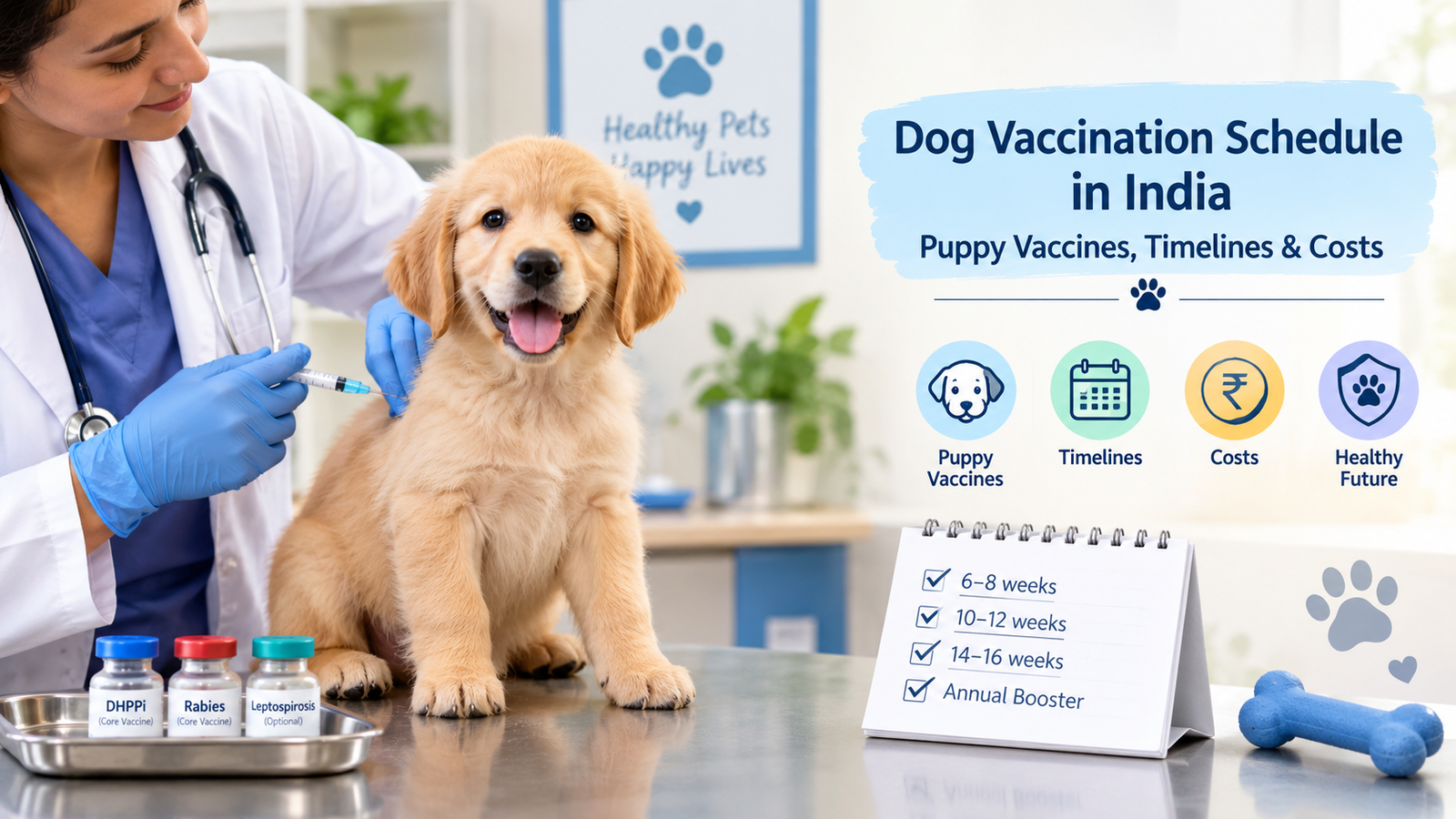
Vaccination is one of the most important parts of responsible dog care in India. Puppies are especially vulnerable to infections such as parvovirus and distemper, while rabies remains a serious public-health concern.
A timely vaccine plan does more than tick a box in a pet record. It helps protect your dog, other animals, and the people who live with them.

Important: There is no single vaccination schedule that suits every puppy. Age at adoption, previous vaccination records, health status, vaccine brand, maternal antibodies, local disease risk, travel, boarding, and your veterinarian’s protocol can all affect the schedule below.
The following guide is designed as a practical reference for Indian pet parents, but it should not replace a veterinary examination or personalised vaccination plan.
Puppy Vaccination Schedule in India at a Glance
The following table provides a general overview of the vaccines commonly discussed during a puppy’s first months.
| Puppy Age | Common Vaccine Visit | What It Generally Covers | Important Note |
|---|---|---|---|
| 6–8 weeks | First DHPP or DHPPi dose | Distemper, adenovirus/hepatitis, parvovirus and often parainfluenza | Start after a veterinarian checks the puppy’s health |
| 10–12 weeks | DHPP booster; rabies may be given | Continues core protection; first rabies dose depending on product and veterinary advice | Follow the product label and applicable local requirements |
| 14–16 weeks | Final puppy-series DHPP dose | Completes the primary puppy series | Timing may be adjusted if earlier doses were missed |
| 12–16 weeks onward | Leptospirosis, kennel cough or other risk-based vaccines | Protection based on lifestyle and exposure | Discuss these if your dog experiences monsoon exposure, boarding, parks or frequent socialisation |
| Around 12 months later | First adult booster review | Booster plan for core and rabies vaccines | Timing depends on product, law, risk and veterinary advice |
Why Does the Puppy Series Require Multiple Doses?
Puppies can have maternal antibodies that interfere with early vaccination. For this reason, vaccination is generally repeated at intervals during the first few months rather than relying on a single dose.
The exact schedule should be determined by your veterinarian based on your puppy’s age, health, records and risk factors.
Which Vaccines Do Puppies Need?

DHPP or DHPPi: The Core Puppy Combination
DHPP generally refers to protection against:
- Canine distemper
- Adenovirus or infectious canine hepatitis
- Canine parvovirus
- Parainfluenza
Some Indian vaccines are labelled DHPPi, while others may include leptospirosis and appear as DHPPiL.
Tip: Ask your veterinary clinic to record the exact vaccine/product name in your dog’s vaccination card rather than relying only on the abbreviation.
Why Is DHPP Important?
Distemper and parvovirus can cause serious illness, particularly in unvaccinated puppies.
Parvovirus, for example, can cause:
- Severe vomiting
- Profuse diarrhoea
- Dehydration
- Weakness
- Rapid deterioration
Exposure can occur through contaminated environments and objects, so simply keeping a puppy indoors does not completely eliminate the risk.
Rabies Vaccination
Rabies is a fatal disease once clinical signs develop and is also a major zoonotic concern.
Rabies vaccination is therefore a core protection priority for dogs in India.
The first dose is often given around 10–12 weeks, although the appropriate timing depends on the vaccine label and the veterinarian’s assessment.
Booster timing may depend on:
- The vaccine used
- Its licensed duration of immunity
- Local regulations
- Your dog’s exposure risk
- Veterinary recommendations
Keep Your Dog’s Rabies Certificate Safe
Your vaccination certificate and vaccine sticker may be useful for:
- Municipal registration
- Boarding
- Travel
- Relocation
- Veterinary records
- Proof of vaccination
Because requirements can vary, check the current rules applicable to your city or destination.
Non-Core Vaccines: When Might Your Dog Need Them?
Not every dog has the same lifestyle or exposure risk. Some additional vaccines may therefore be considered on a risk-based basis.
Leptospirosis
Leptospirosis is associated with bacteria that can spread through contaminated water or soil.
Exposure opportunities may increase with:
- Monsoon conditions
- Flooding
- Stagnant water
- Outdoor activities
- Contact with contaminated environments
Your veterinarian may recommend a two-dose initial course followed by periodic boosters, depending on the product instructions and your dog’s risk profile.
Kennel Cough and Canine Influenza
Bordetella/kennel-cough vaccination may be worth discussing if your dog:
- Uses boarding facilities
- Attends daycare
- Visits busy dog parks
- Goes to shows
- Frequently socialises with unfamiliar dogs
The vaccine may reduce the risk or severity of respiratory illness, but it does not guarantee protection against every cause of coughing.
Canine influenza vaccination is also risk-based and depends on factors such as local exposure and vaccine availability.
Dog Vaccination Costs in India
The cost of dog vaccination in India can vary considerably.

Factors that can affect the final bill include:
- City and location
- Veterinary clinic
- Vaccine brand
- Vaccine availability
- Consultation charges
- Home-visit fees
- Certificate charges
- Additional or optional vaccines
As an illustrative India-facing guide, approximate ranges listed by Zigly include:
| Vaccine | Approximate Cost |
|---|---|
| Rabies | ₹300–500 |
| DHPP | ₹500–1,000 |
| Leptospirosis | ₹400–700 |
| Kennel cough | ₹500–800 |
| Canine influenza | ₹600–1,000 |
Note: These are planning ranges, not fixed national prices. Actual prices can vary by clinic, city, vaccine brand and consultation charges.
A puppy’s first-year vaccination expenses can therefore reach several thousand rupees once multiple DHPP visits, rabies, optional vaccines, consultations, deworming, certificates and follow-up care are included.
What Should You Check Before Choosing a Vaccination Clinic?
Don’t compare vaccine prices alone.
Also ask about:
- Vaccine storage and cold-chain practices
- Vaccine expiry date
- Product name and manufacturer
- Veterinary administration
- Vaccination records
- Consultation charges
- Follow-up requirements
Request an itemised estimate before the appointment so you know what is included.
What Can Change Your Dog’s Vaccination Bill?
| Cost Component | What Can Change the Final Bill |
|---|---|
| Vaccine dose | Brand, combination, imported or locally available product |
| Consultation | Clinic, hospital, home visit or follow-up rate |
| Rabies certificate | Included at some clinics; charged separately at others |
| Optional vaccine | Depends on lifestyle and local exposure |
| Booster visit | Product label, risk, law and veterinary protocol |
How to Prepare for a Vaccination Visit
A little preparation can make the appointment easier and help your veterinarian make better decisions.

Bring Your Dog’s Records
Take:
- Previous vaccination records
- Adoption documents
- Deworming history
- Medication list
- Previous medical records, if available
Tell the Veterinarian About Recent Symptoms
Mention if your puppy has experienced:
- Diarrhoea
- Vomiting
- Fever
- Coughing
- Poor appetite
- Worms
- Recent illness
- Known disease exposure
Vaccines are generally administered to clinically healthy animals. Your veterinarian may postpone vaccination if your dog needs examination or treatment first.
What to Expect After Dog Vaccination
Mild reactions can sometimes occur after vaccination.

These may include:
- Temporary tiredness
- Slightly reduced appetite
- Mild tenderness around the injection site
Follow the clinic’s instructions and provide your dog with:
- Fresh water
- A comfortable place to rest
- Normal observation
- Any medication specifically prescribed by the veterinarian
When Should You Contact a Veterinarian Urgently?
Seek veterinary attention if your dog develops:
- Difficulty breathing
- Facial swelling
- Collapse
- Repeated vomiting
- Severe weakness
- Rapidly worsening symptoms
Never give human medicines to your dog unless a veterinarian specifically prescribes them.
Can Puppies Go Outside After Vaccination?
A puppy’s first vaccine does not provide complete protection.
Until the primary vaccination series is complete and your veterinarian confirms the appropriate waiting period, avoid high-risk environments such as:
- Unknown dog congregations
- Contaminated soil
- Unsupervised dog parks
- Areas with many unvaccinated dogs
However, this does not mean puppies should be completely isolated.
Safe Puppy Socialisation Can Include:
- Calm handling at home
- Household sounds
- Controlled visitors
- Basic handling exercises
- Vet-approved contact with healthy, vaccinated dogs
Ask your veterinarian how to balance disease prevention with safe early socialisation.
What If You Miss a Puppy Vaccine?
If you miss a scheduled dose, do not restart the entire schedule or double a vaccine dose on your own.
Instead:
- Contact your veterinary clinic.
- Provide the dates of previous vaccinations.
- Tell the vet which vaccine products were used, if known.
- Take the vaccination card to the appointment.
- Follow the veterinarian’s catch-up plan.
Depending on the puppy’s age and vaccination history, the veterinarian may:
- Adjust the interval
- Repeat a dose
- Continue the existing series
- Create a catch-up schedule
What If Your Adopted Dog Has No Vaccination Records?
If an older dog has no reliable vaccination documentation, don’t assume that the dog is protected.
Ask your veterinarian to assess the dog and create a new vaccination plan based on the dog’s age, health and available history.
Dog Vaccination Schedule in India: FAQ
Q1: When Should a Puppy Get Its First Vaccine in India?
ANS: Puppies typically receive their first DHPP/DHPPi vaccine at 6–8 weeks, followed by boosters at 10–12 and 14–16 weeks, as advised by a veterinarian.
Q2: Is Rabies Vaccination Compulsory for Dogs in India?
ANS: Rabies vaccination is a core protection priority, while specific legal requirements may vary by state, municipality and situation.
Q3: Can My Puppy Go Outside After the First Vaccine?
ANS: No, puppies should avoid high-risk public areas until their primary vaccination series is complete and the veterinarian approves outdoor exposure.
Q4: How Much Does Puppy Vaccination Cost in India?
ANS: Rabies vaccines may cost around ₹300–500 and DHPP doses around ₹500–1,000, depending on the clinic, city, brand and additional charges.
Q5: What Vaccines Are Commonly Given to Puppies in India?
ANS: Common vaccines include DHPP/DHPPi and rabies, with leptospirosis, Bordetella and canine influenza considered based on the dog’s lifestyle and risk.
Q6: How Often Do Adult Dogs Need Booster Vaccinations?
ANS: Booster timing depends on the vaccine, product label, duration of immunity, local requirements and the dog’s individual risk profile.
Final Takeaway
The best dog vaccination schedule in India is timely, documented and personalised.
Most puppies need a DHPP-series vaccination beginning around 6–8 weeks, followed by additional doses during the puppy period. Rabies vaccination is a core priority, while vaccines such as leptospirosis or kennel cough may be considered according to lifestyle and exposure risk.
For the best protection:
- Keep your vaccination card updated
- Record every vaccine and product name
- Follow your veterinarian’s recommended schedule
- Budget for booster and consultation visits
- Avoid high-risk public areas before adequate puppy protection develops
- Contact your veterinarian if your dog is unwell or you are unsure about a missed dose
A good vaccination plan protects more than your dog—it also helps protect other animals, your family and the wider community.