
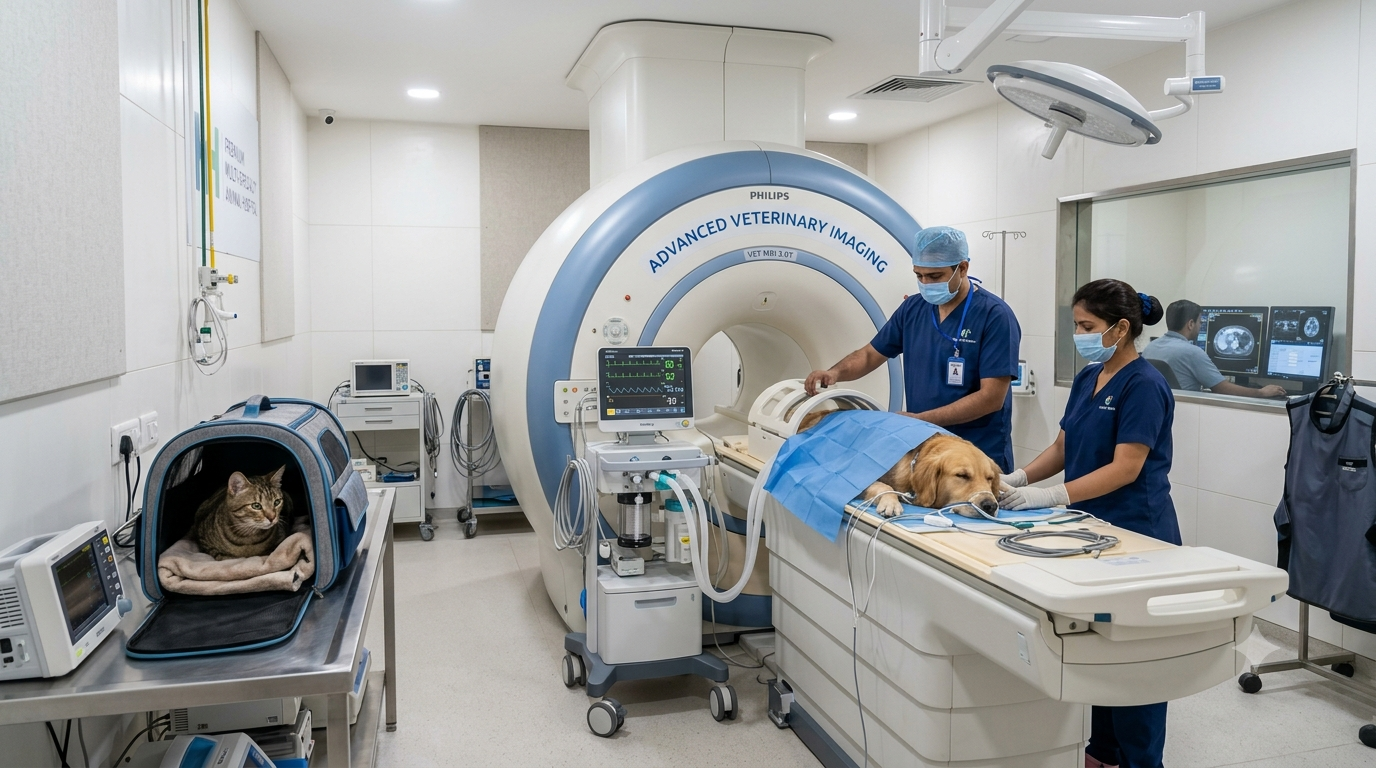
If your veterinarian has recommended an MRI scan for your dog or cat, one of the first questions that probably comes to mind is, “How much does a pet MRI cost in Gurgaon?” While advanced diagnostic imaging can seem expensive, it often provides answers that routine tests, X-rays, or ultrasounds simply cannot. For pets suffering from seizures, spinal injuries, unexplained paralysis, chronic pain, or neurological disorders, an MRI can be the difference between guesswork and an accurate diagnosis.
In Gurgaon, the cost of a pet MRI typically ranges from ₹15,000 to ₹45,000 or more, depending on the type of scan, the body part being examined, the complexity of the case, whether contrast dye is required, the need for general anesthesia, and the veterinary hospital performing the procedure. Although the upfront expense may appear significant, MRI technology allows veterinarians to identify serious medical conditions early, helping them recommend the most effective treatment while avoiding unnecessary surgeries or prolonged medication trials.
As veterinary medicine continues to advance in India, more multispecialty pet hospitals in Gurgaon are investing in sophisticated diagnostic equipment, specialist veterinarians, and advanced imaging facilities. However, because MRI scans involve expensive technology, specialized radiologists, anesthesia teams, and careful patient monitoring, prices can vary considerably from one hospital to another.
This comprehensive guide explains everything pet owners need to know about Pet MRI Cost in Gurgaon, including average pricing, factors that influence costs, when an MRI becomes necessary, how the procedure is performed, preparation guidelines, recovery after anesthesia, hidden expenses to consider, and practical tips for choosing the right veterinary hospital. Whether you own a playful Labrador, an energetic German Shepherd, a Persian cat, or any other beloved companion, this guide will help you make an informed decision when advanced imaging is recommended.
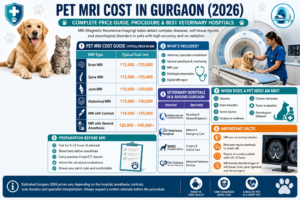
Pet MRI Cost in Gurgaon at a Glance
Before diving into the details, here’s a quick overview of what pet owners can generally expect.
What Is a Pet MRI?
Magnetic Resonance Imaging (MRI) is one of the most advanced diagnostic tools available in veterinary medicine. Unlike X-rays, which primarily show bones, MRI uses a powerful magnetic field and radio waves to produce detailed images of soft tissues, including the brain, spinal cord, nerves, muscles, ligaments, joints, and internal organs.
For veterinarians, MRI is invaluable because many serious diseases cannot be accurately diagnosed using routine imaging. Conditions affecting the nervous system, intervertebral discs, brain tissue, or soft tissues often require MRI for confirmation.
An MRI does not use ionizing radiation like an X-ray or CT scan. Instead, it creates highly detailed cross-sectional images that allow veterinary specialists to evaluate abnormalities with remarkable precision.
Because animals cannot remain perfectly still for 30 to 90 minutes, MRI scans are almost always performed under general anesthesia, ensuring both image quality and patient safety.

Why Might Your Pet Need an MRI?
Veterinarians usually recommend MRI only after a physical examination and initial diagnostic tests suggest that advanced imaging is necessary. It is not a routine screening test but rather a specialized investigation used when other methods cannot provide sufficient information.
Common reasons your veterinarian may recommend an MRI include:
Persistent Seizures
If a dog or cat experiences repeated seizures without an obvious cause, MRI helps identify brain abnormalities such as inflammation, tumors, congenital defects, or strokes.
Difficulty Walking
Sudden weakness, wobbliness, dragging limbs, or paralysis often indicates spinal cord disease. MRI is considered the gold standard for diagnosing conditions like slipped discs and spinal compression.
Neck or Back Pain
Pets suffering from severe spinal pain may have intervertebral disc disease (IVDD), spinal trauma, infections, or tumors that require MRI evaluation.
Head Trauma
After serious accidents, MRI provides detailed information about brain injuries that may not appear on conventional X-rays.
Unexplained Behavioral Changes
Sudden aggression, confusion, circling, head pressing, or disorientation may indicate neurological disease requiring advanced imaging.
Chronic Lameness
When orthopedic examinations, X-rays, and ultrasounds fail to identify the cause of persistent limping, MRI may reveal ligament injuries, tendon damage, cartilage disease, or soft tissue abnormalities.

Conditions Commonly Diagnosed Through Pet MRI
One reason MRI has become such an important diagnostic tool is its ability to detect diseases at an early stage.
Some of the most common conditions diagnosed through MRI include:
- Brain tumors
- Epilepsy and seizure disorders
- Intervertebral Disc Disease (IVDD)
- Spinal cord compression
- Herniated discs
- Stroke
- Hydrocephalus
- Brain inflammation
- Meningitis
- Degenerative spinal disease
- Nerve injuries
- Joint ligament damage
- Soft tissue tumors
- Ear disorders affecting balance
- Congenital neurological abnormalities
Many of these conditions cannot be confirmed through blood tests or X-rays alone, making MRI a critical step in developing an effective treatment plan.
What Affects Pet MRI Cost in Gurgaon?
Many pet owners are surprised when different hospitals quote different prices for the same MRI scan. This variation is completely normal because several factors influence the final bill.
1. Body Part Being Examined
A brain MRI may require different imaging sequences than a joint MRI. Similarly, spinal MRIs often take longer because multiple vertebral segments must be evaluated.
More complex scans naturally increase costs.
2. General Anesthesia
Unlike humans, pets cannot understand instructions to remain motionless.
Even slight movement can blur MRI images.
Therefore, almost every veterinary MRI requires general anesthesia administered by trained professionals. The cost includes:
- Pre-anesthetic examination
- IV catheter placement
- Monitoring equipment
- Oxygen support
- Recovery supervision
- Emergency medications if required
Larger breeds generally require more anesthetic drugs, which may increase the overall cost.
3. Contrast Dye
Certain neurological disorders, tumors, and inflammatory diseases require contrast-enhanced MRI.
Contrast agents help veterinarians distinguish healthy tissue from abnormal tissue more clearly.
Adding contrast usually increases the overall bill.
4. Specialist Interpretation
An MRI scan is only useful when interpreted accurately.
Many hospitals involve veterinary radiologists or neurologists who analyze hundreds of MRI images before issuing a detailed diagnostic report.
Specialist reporting contributes to the overall cost but significantly improves diagnostic accuracy.
5. Size of Your Pet
Scanning a Chihuahua is quite different from scanning a Great Dane.
Larger animals often require:
- Higher anesthesia doses
- Longer preparation
- More monitoring
- Additional staff
These factors may influence pricing.
6. Emergency MRI
If your pet arrives at the hospital late at night with sudden paralysis or continuous seizures, emergency MRI services may involve additional charges because specialists, technicians, and operating facilities must be made available immediately.
7. Hospital Infrastructure
Multispecialty veterinary hospitals with advanced diagnostic facilities generally charge more because they maintain:
- MRI suites
- Intensive Care Units (ICU)
- Surgical specialists
- Neurologists
- Advanced anesthesia equipment
- 24×7 emergency support
Although prices may be higher, these hospitals also provide comprehensive care if surgery or hospitalization becomes necessary after the scan.
Is Pet MRI Really Worth the Cost?
For many families, spending tens of thousands of rupees on diagnostic imaging can feel overwhelming. However, it’s important to understand that an MRI is often recommended only after less expensive tests have failed to identify the problem.
In many cases, MRI actually saves money over time.
Without an accurate diagnosis, pets may undergo repeated consultations, unnecessary medications, multiple X-rays, blood tests, and ineffective treatments that still fail to address the underlying disease.
An MRI provides a clear picture of what’s happening inside your pet’s body, allowing veterinarians to recommend targeted treatment instead of relying on trial and error.
For conditions such as spinal disc disease, brain tumors, neurological disorders, or ligament injuries, early diagnosis can significantly improve treatment outcomes and may even prevent permanent disability.
MRI vs X-Ray vs CT Scan vs Ultrasound: Which One Does Your Pet Need?
Many pet owners are understandably confused when their veterinarian recommends an MRI after already performing an X-ray or ultrasound. Each imaging technique serves a different purpose, and choosing the right one depends on the condition being investigated.
| Imaging Test | Best For | Limitations |
|---|---|---|
| X-ray | Broken bones, fractures, chest evaluation | Poor soft tissue detail |
| Ultrasound | Abdomen, pregnancy, liver, kidneys, bladder | Cannot evaluate brain or spinal cord effectively |
| CT Scan | Bone injuries, nasal disease, complex fractures | Less detailed for soft tissues than MRI |
| MRI | Brain, spinal cord, nerves, muscles, ligaments, soft tissues | Higher cost, requires anesthesia |
Rather than replacing one another, these imaging methods complement each other. Your veterinarian will recommend the most appropriate option based on your pet’s symptoms and clinical findings.
How Veterinarians Decide Whether an MRI Is Necessary
An MRI is rarely the first diagnostic test. Most pets follow a step-by-step evaluation process that begins with a detailed history and physical examination. Depending on the symptoms, your veterinarian may first recommend blood tests, X-rays, or ultrasound to rule out common conditions.
If those tests do not explain the problem—or if neurological disease is strongly suspected—advanced imaging becomes the next logical step. For example, a dog with recurring seizures may have normal blood work but still require an MRI to identify inflammation or structural abnormalities in the brain. Similarly, a pet with sudden paralysis may need MRI to locate spinal cord compression before surgery is considered.
Choosing MRI at the right time helps avoid delays in diagnosis and ensures that treatment decisions are based on accurate information rather than assumptions.
How Is a Pet MRI Performed? A Step-by-Step Guide
Many pet owners feel anxious when they hear that their dog or cat needs an MRI, especially because the procedure usually involves general anesthesia. Understanding what happens before, during, and after the scan can help reduce concerns and prepare you for the process.
Unlike humans, pets cannot remain completely still inside an MRI machine. Even slight movement can blur the images, making them difficult to interpret. For this reason, veterinarians follow a carefully planned protocol to ensure accurate imaging while keeping your pet safe and comfortable.

Step 1: Initial Veterinary Examination
The process begins with a thorough clinical examination. Your veterinarian will review your pet’s medical history, current symptoms, previous diagnostic reports, medications, and overall health. This helps determine whether MRI is the most appropriate diagnostic tool or if other imaging methods, such as CT scans or ultrasound, would be sufficient.
If MRI is recommended, the veterinarian will explain the purpose of the scan, expected costs, possible findings, and any associated risks.
Step 2: Pre-Anesthetic Blood Tests
Before administering anesthesia, most veterinary hospitals perform blood tests to assess your pet’s health. These tests evaluate liver function, kidney function, blood sugar levels, electrolyte balance, and overall blood parameters.
The results help veterinarians determine whether your pet is fit for anesthesia and whether any adjustments to the anesthetic protocol are necessary. Older pets or those with chronic medical conditions may require additional cardiac evaluations or chest imaging before the MRI.
Step 3: Fasting Before the MRI
Pets are generally asked to fast for several hours before anesthesia to reduce the risk of vomiting and aspiration during the procedure. Water may be allowed until a few hours before the scan, depending on the veterinarian’s instructions.
Young puppies, kittens, diabetic pets, or animals with specific medical conditions may receive modified fasting instructions, so it’s essential to follow the guidance provided by your veterinary team.
Step 4: Administration of General Anesthesia
Once your pet arrives at the hospital, an intravenous catheter is placed to administer fluids and medications. General anesthesia is then carefully induced, allowing the pet to sleep comfortably throughout the scan.
Modern veterinary hospitals continuously monitor heart rate, oxygen levels, blood pressure, breathing, body temperature, and other vital signs throughout the procedure. This monitoring significantly improves patient safety and allows the anesthesia team to respond immediately if any changes occur.
Step 5: Positioning Inside the MRI Machine
After anesthesia takes effect, the veterinary team positions your pet carefully inside the MRI scanner. Proper positioning is essential because even a small movement can affect image quality.
Depending on the suspected condition, the MRI may focus on the brain, spine, joints, neck, pelvis, or another specific body part. Different imaging sequences are performed to capture detailed cross-sectional images from multiple angles.
Some cases require a contrast agent to improve visualization of tumors, inflammation, or blood vessels.
Step 6: Image Interpretation
Once the scan is complete, hundreds of detailed images are reviewed by a veterinary radiologist or specialist. These images provide information that cannot be obtained through routine X-rays or ultrasound.
The specialist prepares a comprehensive report, highlighting any abnormalities such as spinal disc disease, brain tumors, nerve compression, ligament injuries, inflammation, or congenital defects.
Step 7: Recovery From Anesthesia
After the MRI, your pet is moved to a recovery area where trained staff closely monitor breathing, heart rate, body temperature, and overall recovery.
Most pets begin waking up within a short time, although complete recovery from anesthesia may take several hours depending on age, health, and the medications used.
Many hospitals discharge patients the same day, while pets requiring surgery or intensive monitoring may remain hospitalized overnight.
How Long Does a Pet MRI Take?
The MRI scan itself usually lasts between 30 and 90 minutes, although more complex neurological studies may require additional imaging sequences.
When preparation, anesthesia, positioning, recovery, and specialist reporting are included, your pet may spend four to eight hours at the hospital.
In emergency neurological cases, hospitalization may be longer to allow continuous monitoring and immediate treatment if needed.
How Should You Prepare Your Pet Before an MRI?
Proper preparation helps ensure a smooth procedure and reduces unnecessary complications. Your veterinarian will provide detailed instructions based on your pet’s age and medical condition, but several general recommendations apply to most patients.
Follow all fasting instructions carefully and avoid offering food outside the recommended schedule. Continue medications only if your veterinarian specifically advises you to do so, as some drugs may interfere with anesthesia or diagnostic findings.
Bring previous blood test reports, X-rays, ultrasound reports, CT scans, vaccination records, and details of any ongoing medications. These documents help the veterinary team interpret MRI findings more accurately.
If your pet has experienced seizures, difficulty walking, paralysis, or unusual behavior, recording a short video on your phone can also be extremely helpful for the neurologist.

What Happens After the MRI?
Many owners expect immediate answers after the scan, but interpreting MRI images requires careful evaluation.
In straightforward cases, preliminary findings may be discussed on the same day. More complicated neurological cases may require additional review before the final report is released.
Once the diagnosis is confirmed, your veterinarian will explain the available treatment options. Depending on the condition, treatment may involve medication, physiotherapy, surgery, rehabilitation, or long-term neurological management.
MRI often serves as the starting point for developing a comprehensive treatment plan rather than being the treatment itself.

Is MRI Safe for Dogs and Cats?
MRI itself is considered extremely safe because it does not use harmful radiation. Unlike CT scans or repeated X-rays, MRI relies on magnetic fields and radio waves to produce images.
The primary concern is not the MRI machine but the anesthesia required to keep pets completely still.
Fortunately, modern veterinary anesthesia has become much safer than it was years ago. Advanced monitoring equipment, experienced anesthetists, and individualized drug protocols have significantly reduced complications.
Healthy pets generally tolerate anesthesia very well. Older animals or pets with heart disease, kidney disease, or respiratory problems may require additional testing before the procedure to minimize risks.
Possible Risks of Pet MRI
Although complications are uncommon, no medical procedure is entirely risk-free.
Potential risks include reactions to anesthesia, temporary nausea, delayed recovery in older pets, low blood pressure during anesthesia, allergic reactions to contrast agents, or complications related to pre-existing medical conditions.
These risks are carefully evaluated before the MRI, and veterinary teams remain prepared to manage any unexpected situations.
For most pets, the benefits of obtaining an accurate diagnosis greatly outweigh the relatively low risks associated with the procedure.
Why Do Most Pets Need General Anesthesia for MRI?
One of the most common questions pet owners ask is whether sedation alone is sufficient.
In most cases, the answer is no.
MRI machines capture extremely detailed images over an extended period. Even tiny movements caused by breathing, muscle twitching, or shifting position can blur the images.
General anesthesia ensures complete stillness, allowing specialists to obtain high-quality diagnostic images without repeating the scan.
Attempting an MRI without adequate immobilization usually results in poor image quality and may ultimately increase costs if the scan needs to be repeated.
Hidden Costs You Should Consider
When planning for a pet MRI, many owners focus only on the quoted scan price. However, several additional expenses may be part of the overall diagnostic process.
These may include the initial specialist consultation, blood tests before anesthesia, intravenous fluids, anesthesia charges, contrast dye if required, hospitalization, neurological consultation, medications after discharge, follow-up appointments, and rehabilitation or surgery if the MRI identifies a condition requiring treatment.
Discussing the complete estimate with your veterinary hospital beforehand helps avoid unexpected expenses and allows you to plan accordingly.
Can Pet Insurance Cover MRI Costs?
If your pet is covered under a comprehensive insurance policy, part of the MRI expense may be reimbursed depending on the policy terms.
Coverage varies between insurers and depends on waiting periods, exclusions, pre-existing conditions, annual claim limits, and whether advanced diagnostics are included.
Before scheduling the scan, contact your insurance provider to confirm eligibility and understand the documentation required for reimbursement.
How to Choose the Right Veterinary Hospital for a Pet MRI in Gurgaon
An MRI scan is a significant medical investment, so choosing the right hospital is just as important as deciding to proceed with the test.
Rather than selecting a facility based solely on price, consider the hospital’s experience with neurological and orthopedic cases. A hospital that regularly manages complex brain, spinal, and nerve disorders is more likely to have the expertise needed for accurate diagnosis and treatment planning.
Ask whether the MRI images are interpreted by a board-certified veterinary radiologist or an experienced specialist. Accurate interpretation is critical because treatment decisions often depend entirely on the MRI findings.
It is also worth checking whether the hospital offers comprehensive services under one roof, including emergency care, surgery, intensive care, laboratory diagnostics, physiotherapy, and rehabilitation. If the MRI identifies a condition requiring immediate surgery, having these facilities available can save valuable time.
Reading verified patient reviews, discussing the hospital’s anesthesia protocols, and understanding what is included in the quoted price can also help you make an informed decision.

Questions Every Pet Owner Should Ask Before Booking an MRI
Before confirming your appointment, it’s helpful to ask a few important questions. Understanding the entire process in advance can prevent confusion and unexpected costs later.
Ask whether the quoted fee includes anesthesia, specialist reporting, contrast dye, hospitalization, and follow-up consultation. Find out how long your pet will remain at the hospital, when the MRI report will be available, and whether a veterinary neurologist will review the images.
You should also ask about emergency support, postoperative care if surgery becomes necessary, and the estimated recovery time after anesthesia.
Having clear answers to these questions allows you to compare hospitals fairly and choose the option that provides the best overall value rather than simply the lowest price.
Pet MRI Costs by Dog Size
Although the MRI machine remains the same, the overall cost may vary depending on your pet’s size because larger animals often require more anesthetic medication, additional monitoring, and longer preparation.
| Pet Size | Estimated MRI Cost |
|---|---|
| Small Dogs & Cats | ₹15,000 – ₹28,000 |
| Medium Dogs | ₹18,000 – ₹35,000 |
| Large Dogs | ₹22,000 – ₹40,000 |
| Giant Breeds | ₹25,000 – ₹45,000+ |
These figures are approximate and vary depending on the hospital, the complexity of the scan, and any additional diagnostic procedures required.
Why Gurgaon Is Emerging as a Leading Destination for Advanced Veterinary Diagnostics
Over the last few years, Gurgaon has become one of India’s fastest-growing cities for specialized veterinary care. Increasing pet ownership, rising awareness of preventive healthcare, and the availability of experienced veterinary specialists have encouraged many hospitals to invest in advanced diagnostic technology.
Today, pet owners in Gurgaon can access services that were once available only in a few metropolitan referral centers. Multispecialty hospitals now offer advanced surgery, intensive care units, orthopedic treatment, cardiology, oncology, neurology, diagnostic imaging, rehabilitation, and emergency care under one roof.
This means pets no longer need to travel long distances for many complex diagnostic procedures, reducing stress for both owners and animals while allowing faster diagnosis and treatment.
The Future of Veterinary MRI in India
Veterinary medicine in India is evolving rapidly. As awareness grows and diagnostic technology becomes more accessible, MRI is expected to play an increasingly important role in managing complex medical conditions.
Several trends are shaping the future of advanced veterinary imaging:
Artificial intelligence is beginning to assist radiologists in identifying subtle abnormalities more efficiently. Improvements in anesthesia protocols are making advanced imaging even safer for senior pets and high-risk patients. Faster MRI machines are reducing scan times while producing higher-resolution images, improving patient comfort and diagnostic accuracy.
As more veterinary hospitals adopt advanced imaging systems, pet owners can expect better access to specialized care, shorter waiting periods, and increasingly comprehensive treatment options.

Tips to Reduce Your Overall Diagnostic Expenses
Although an MRI is a significant investment, there are practical ways to manage costs without compromising your pet’s care.
Seek veterinary attention as soon as symptoms appear rather than waiting for the condition to worsen. Early diagnosis often prevents complications that require more expensive treatment.
Maintain regular preventive health check-ups, vaccinations, and parasite control, as many neurological and infectious conditions can be detected earlier through routine veterinary examinations.
Keep copies of previous blood tests, imaging reports, and medical records. Having a complete medical history helps veterinarians avoid unnecessary repeat investigations.
If pet insurance is available for your pet, review the policy carefully to understand coverage for advanced diagnostic procedures before an emergency occurs.
Most importantly, avoid delaying recommended diagnostic tests solely because symptoms appear to improve temporarily. Many neurological diseases progress silently, and early intervention often leads to better long-term outcomes.
Frequently Asked Questions (FAQs)
1. How much does a pet MRI cost in Gurgaon?
A pet MRI in Gurgaon typically costs between ₹15,000 and ₹45,000, depending on the hospital and type of scan.
2. Why would my pet need an MRI scan?
An MRI helps diagnose brain, spinal cord, nerve, joint, and soft tissue conditions that other imaging tests may miss.
3. Does my dog or cat need anesthesia for an MRI?
Yes, most pets require general anesthesia to remain completely still during the scan.
4. How long does a pet MRI take?
The MRI scan usually takes 30 to 90 minutes, while the entire hospital visit may last 4–8 hours.
5. Is a pet MRI safe?
Yes, MRI is a safe, non-invasive imaging technique that does not use radiation.
Final Thoughts
Hearing that your pet needs an MRI can feel overwhelming, especially when you consider the cost and the thought of anesthesia. However, advanced imaging is often the key to identifying conditions that cannot be detected through routine examinations, blood tests, or X-rays alone. Whether your pet is experiencing seizures, spinal pain, paralysis, chronic lameness, or unexplained neurological symptoms, an MRI can provide the detailed information needed to make informed treatment decisions.
While the price of a pet MRI in Gurgaon may seem substantial, it should be viewed as an investment in accurate diagnosis rather than simply another medical expense. A timely MRI can reduce unnecessary treatments, shorten the diagnostic journey, and help veterinarians begin the right treatment sooner—potentially improving your pet’s quality of life and long-term prognosis.
When selecting a veterinary hospital, look beyond the quoted price. Consider the experience of the medical team, the availability of advanced anesthesia and monitoring, specialist interpretation of MRI images, emergency support, and comprehensive follow-up care. Choosing a trusted hospital with expertise in advanced diagnostics can make a significant difference to your pet’s treatment outcome.
With Gurgaon continuing to expand its network of multispecialty veterinary hospitals and advanced diagnostic facilities, pet owners now have access to world-class imaging services closer to home. By understanding the MRI process, preparing appropriately, and working closely with an experienced veterinarian, you can make confident decisions that prioritize your pet’s health and well-being.